Architecture

Ding-Ding, Fill’er Up!

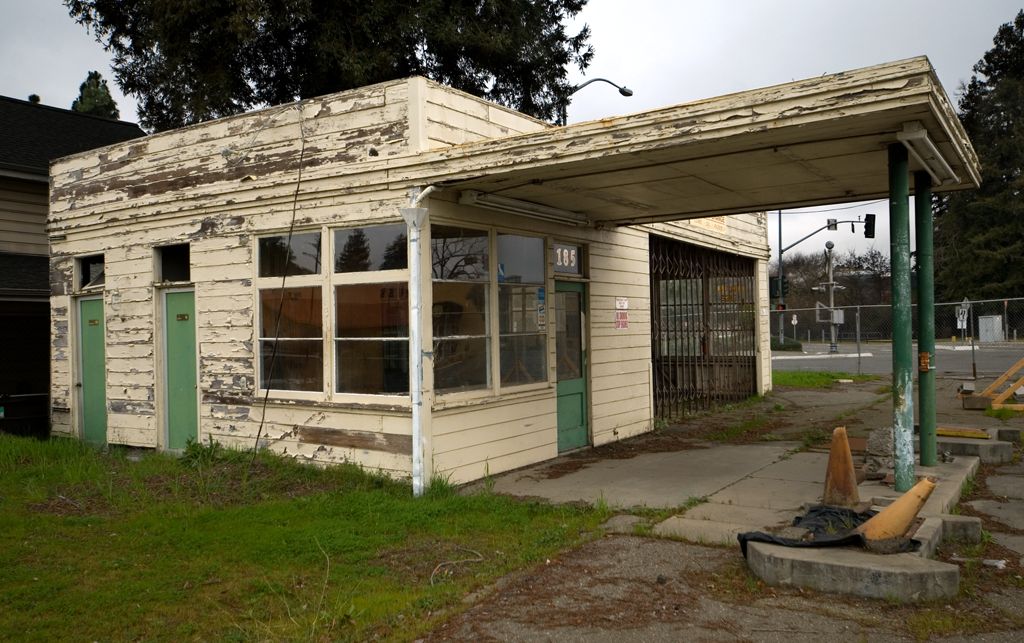
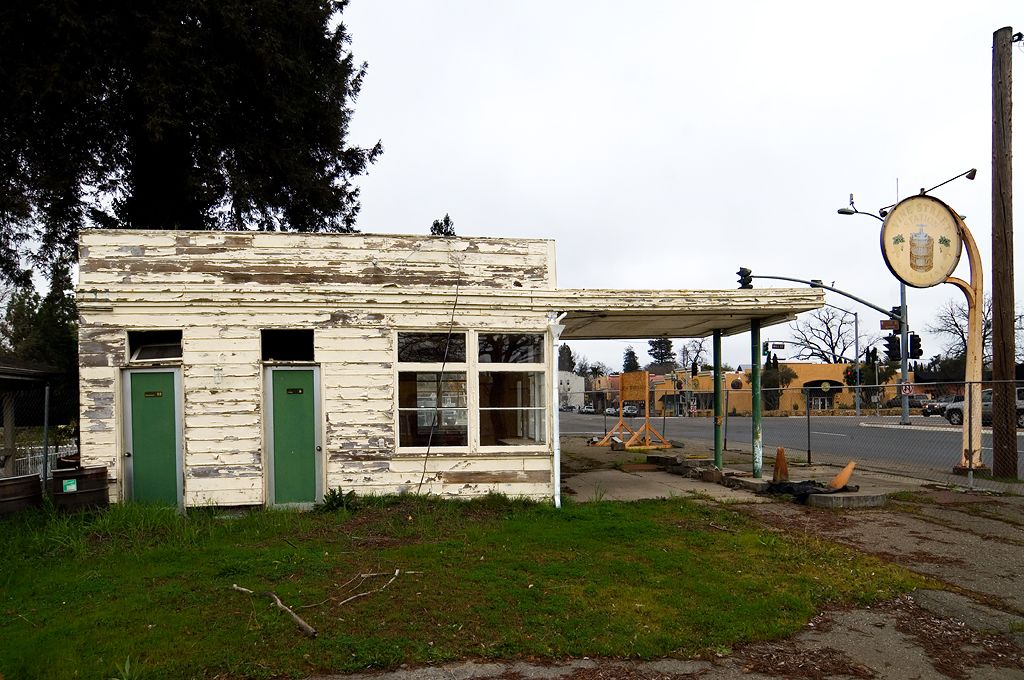
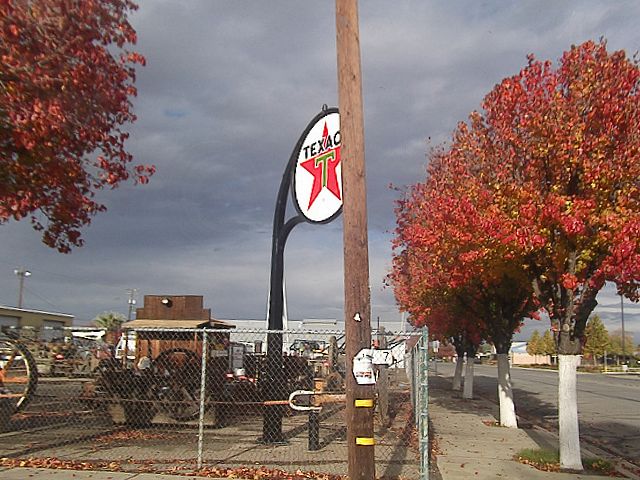
This forlorn VERY old Texaco station is in Healdsburg, CA.

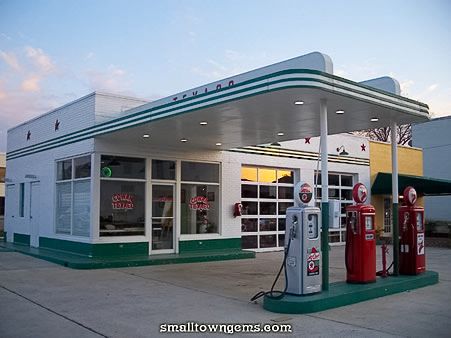
In its day it would have looked something like these. Top, a restored Texaco station in Cowan, Tennessee Photo courtesy of SmallTownGems.com. Below, the toy Texaco station from the late 1950’s or early 1960’s. That’s for sure because I had one!

The Texaco stations were the creation of renown industrial designer Walter Dorwin Teague. His work is some of the most iconic of the twentieth century.

I am particularly interested in the sign. It seems to me an earlier version of what became their best known sign, as seen in the toy above. This particular style I’ve only seen once or twice in various Google searches.

I believe the sign to be very rare, and I hope the folks in Healdsburg can at least save the sign, if not the station itself.

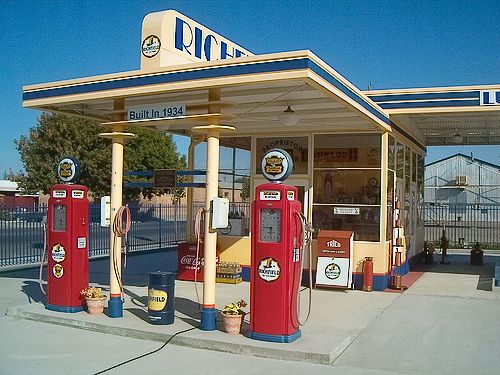
Here is a restored sign at the R.C. Baker Museum in Coalinga, CA. Photo by Dylan Szoshke.

R.C. Baker Museum

Restored historic gas stations ad color and interest to the fabric of our urban landscape. We learn about the changing look of industrial or commercial design over the decades. It points to the rise and dominance of the automobile in our culture. The need for speed and convenience. These are just a few examples of the teaching that historic buildings provide.

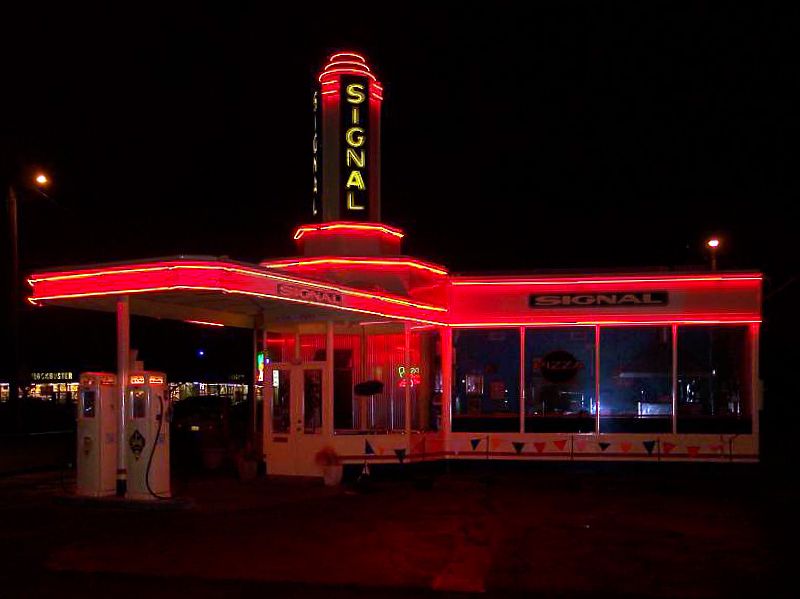
Adaptive Reuse.  SIGNAL STATION PIZZA Located at the historic gas station in St. Johns 8302 North Lombard Street (At North Charleston Avenue) Portland, Oregon

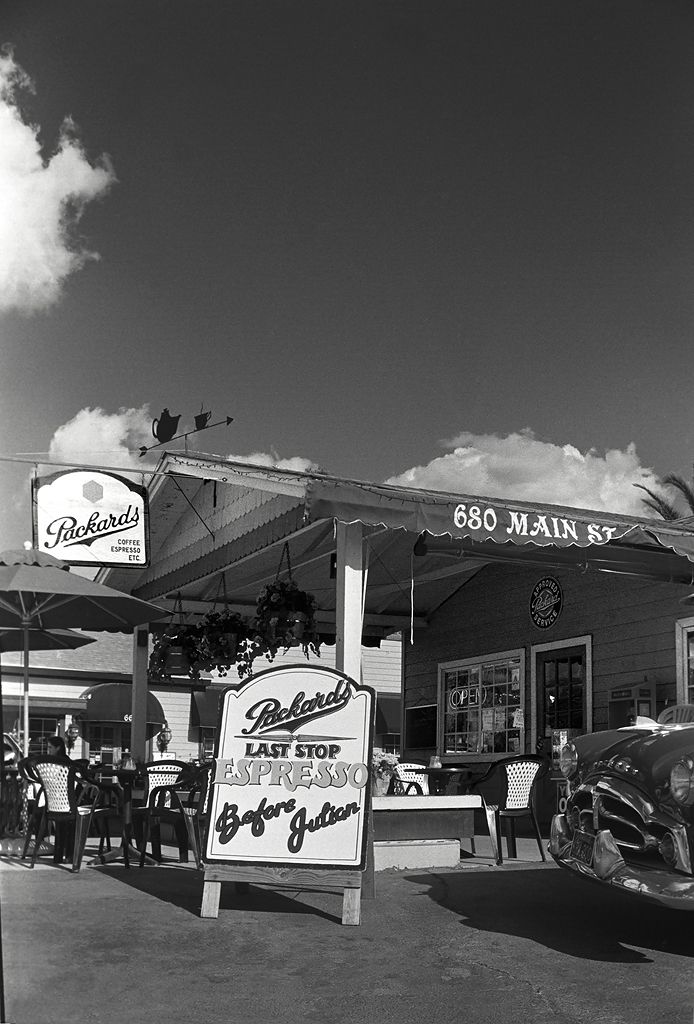
Adaptive Reuse. Packard’s in Ramona, is a popular coffee house.


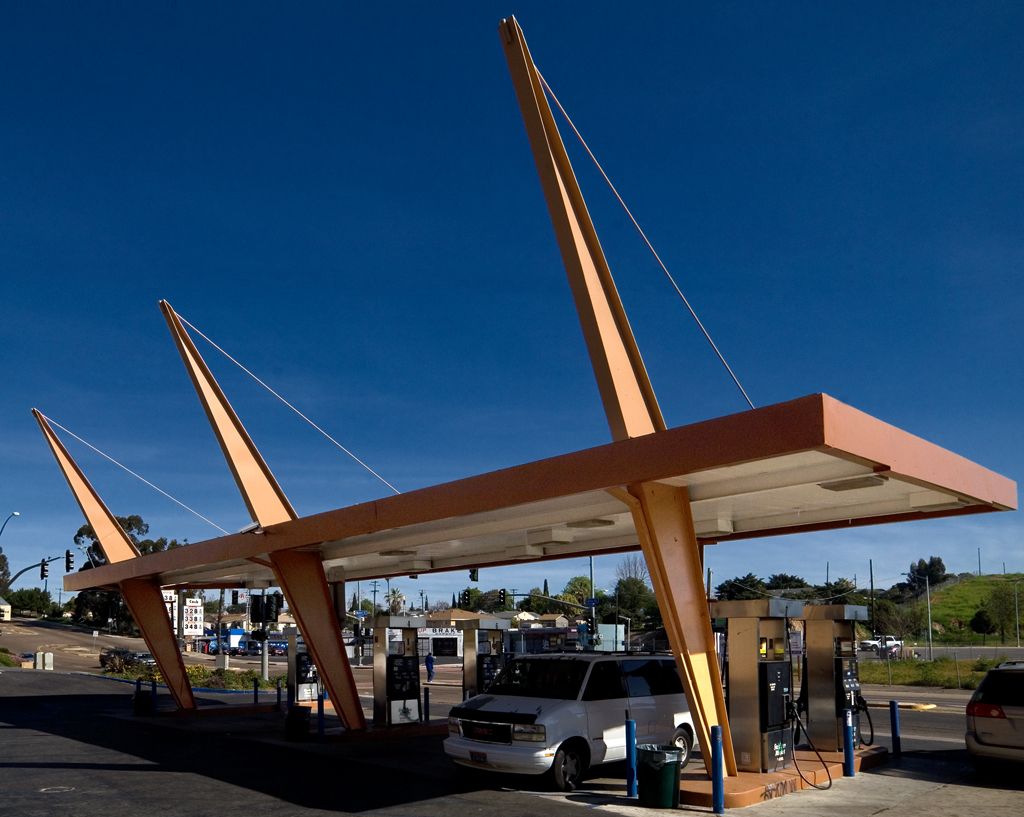
San Diego Historical Resources Board Designation. Johnson’s Wilshire Gas Station 4689 Market Street, San Diego. The resource embodies the distinctive characteristics and character defining features of Googie architecture and retains a good level of architectural integrity from its 1962 period of significance.

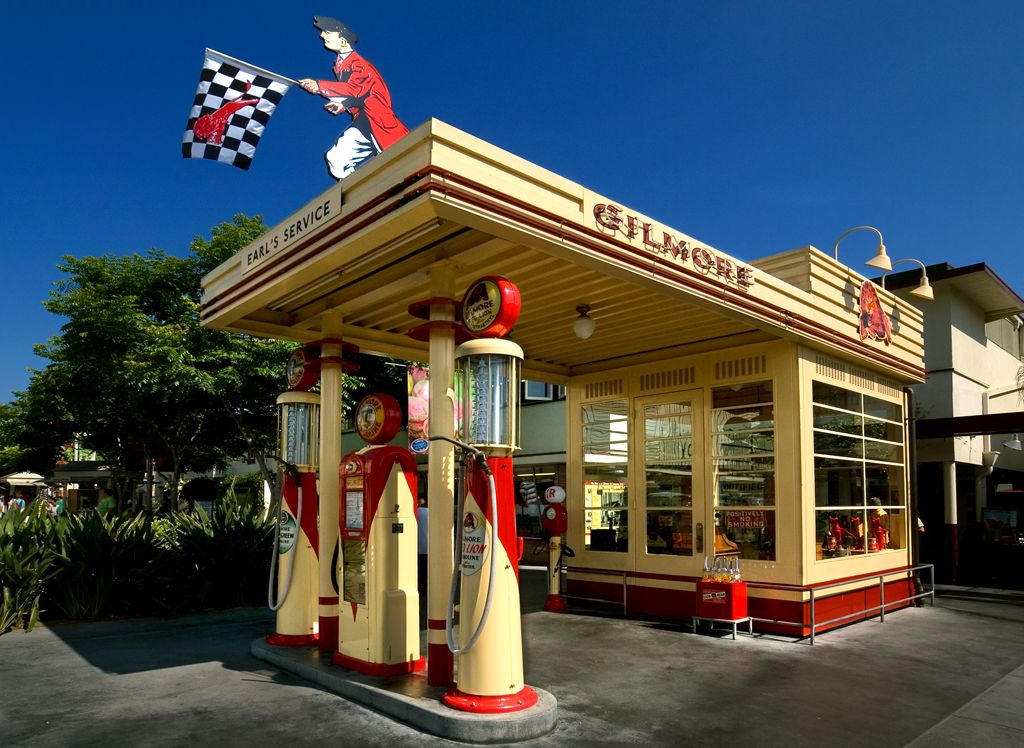
The Appeal of Historic Design Features. This Gilmore Gas Station at the Fairfax Farmers Market in Los Angeles helps make this destination popular to locals and tourists alike.

Keeping Community Character. Mike Burnett (jumping) and Craig Abenilla (kneeling) own the Golden Hill architecture firm, Foun-dationForForm. Their plans to develop the site at 811 25th Street appears to utilize the mid century gas station at the site rather than demolish it. Kudos to you gentlemen!

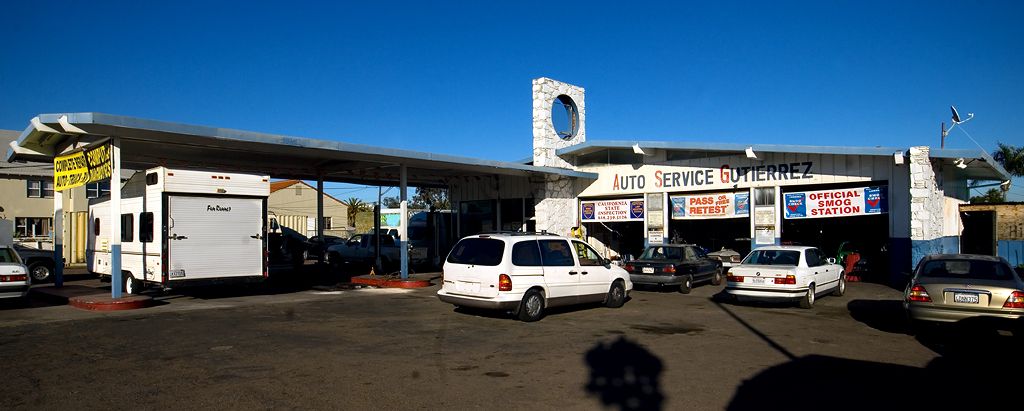
It was a Texaco station with characteristic mid century design elements. Not nearly as old as Santa Rosa’s, but it is good news it won’t disappear. And we look forward to it it looking great, if not better than ever one day.

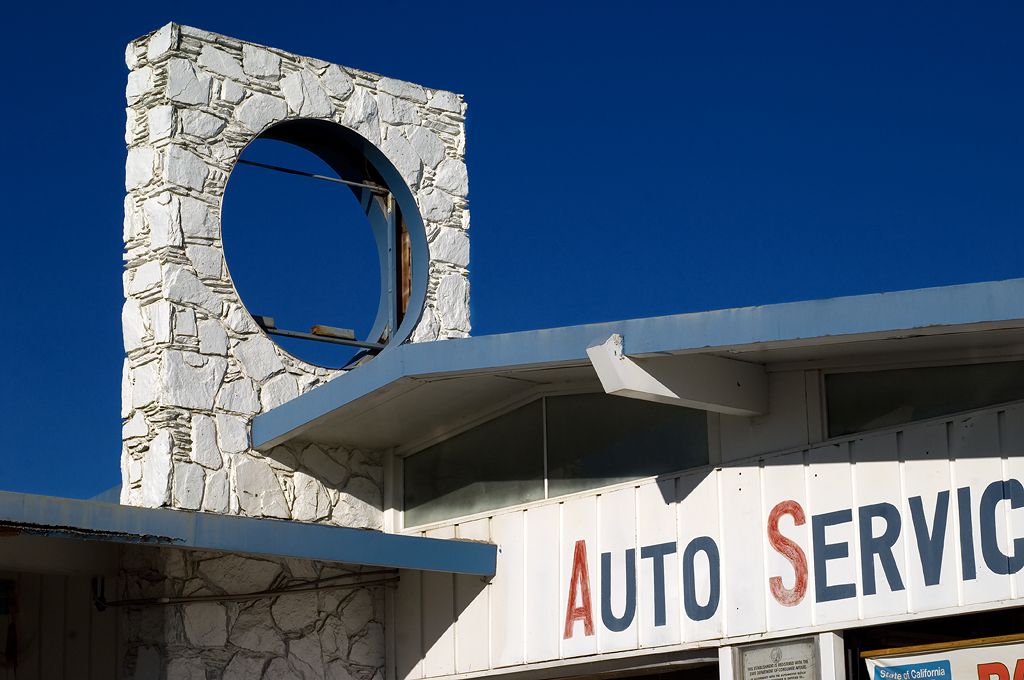
It should be illegal to paint over natural rock! Midcentury design elements at play here. A thick rock sign blade with circular cut out. Post and beam. Clerestory windows,  Board and batton wall effect.

The former Texaco Station at University and First is a vintage Walter Dorwin Teague era building. It would be wonderful to see great things happen to this resource as we’ve seen in other cases.


Dan Soderberg Photography

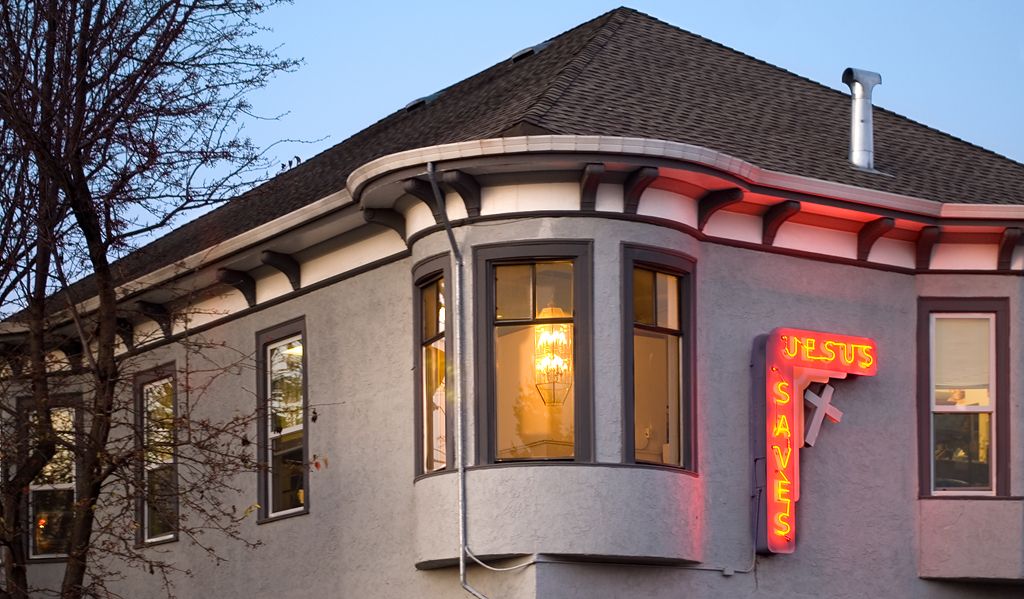
Jesus Saves!


Santa Rosa, CA

Jesus Saves, but apparently not the building’s wooden siding or double hung windows. The rotunda windows still look good, but the windows on the far left and right all have that cheap looking plastic white patio chair look. These windows begin to blotch, deteriorate and become uglier and uglier only after a few years. The life span of vinyl windows is relatively short, regardless of the bogus advertising permeating everywhere.

Well adjusted and maintained wooden windows are not nearly as energy inefficient as vinyl propaganda contends. Plus wood is the only truly sustainable window option.

I restored my 75 year old windows. They look great, work perfectly–and they should be good for another 75 years. Unless someone comes along after I’m gone and destroys my good work with crappy vinyl. But hopefully by then most people will have learned the completely awful truth about vinyl.

The tasteless application of stucco over wooden siding as well as the vinyl window craze is doing as much damage to historic architecture as developers and speculators.


Dan Soderberg Photography

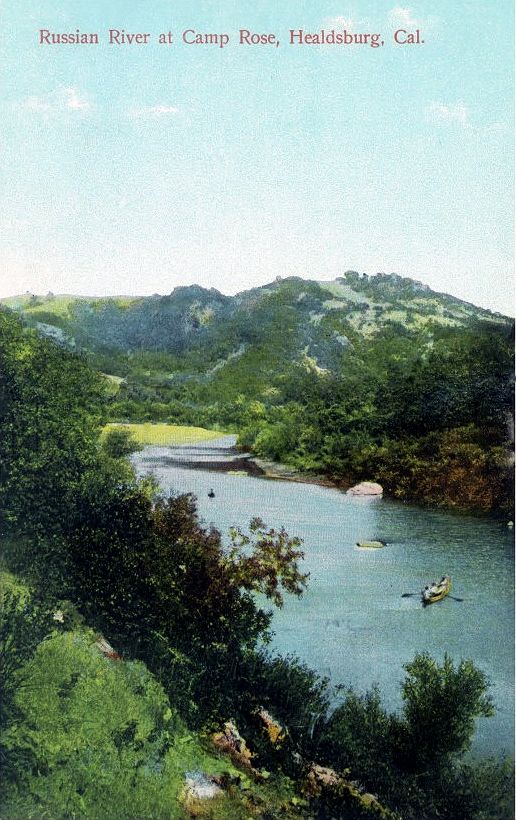
Camp Rose

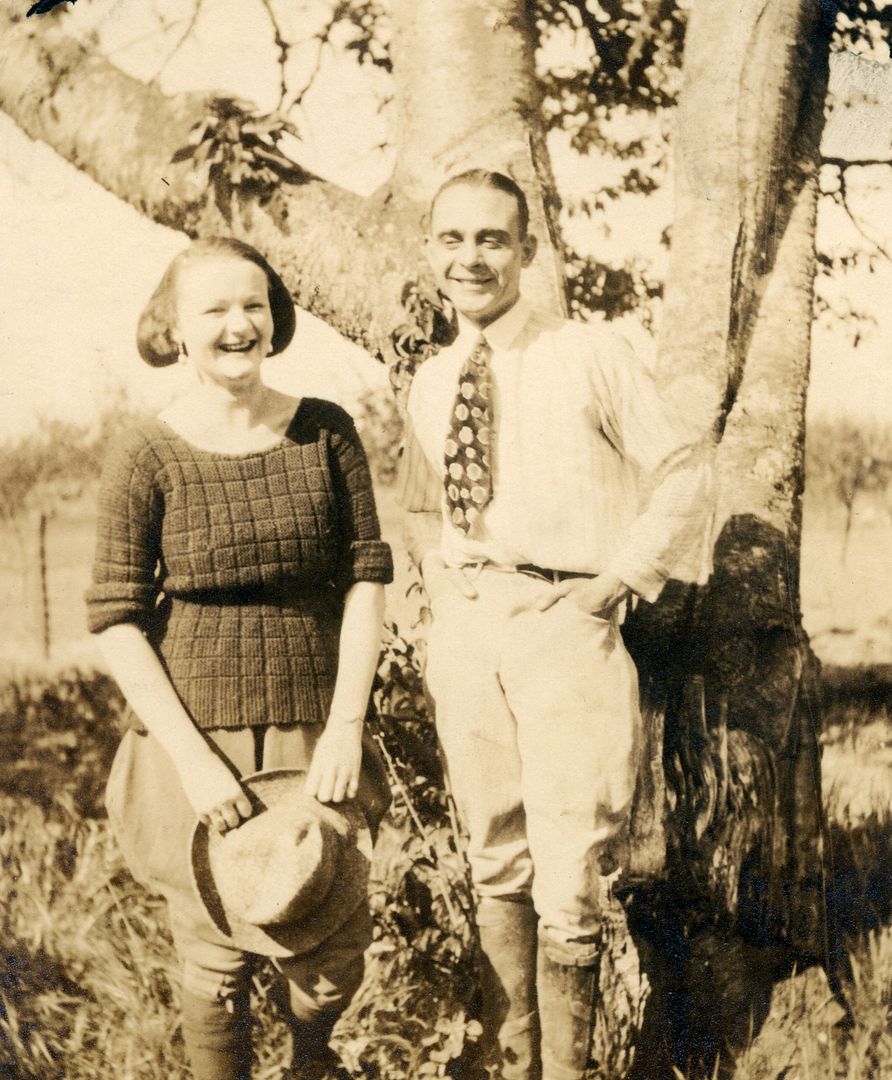
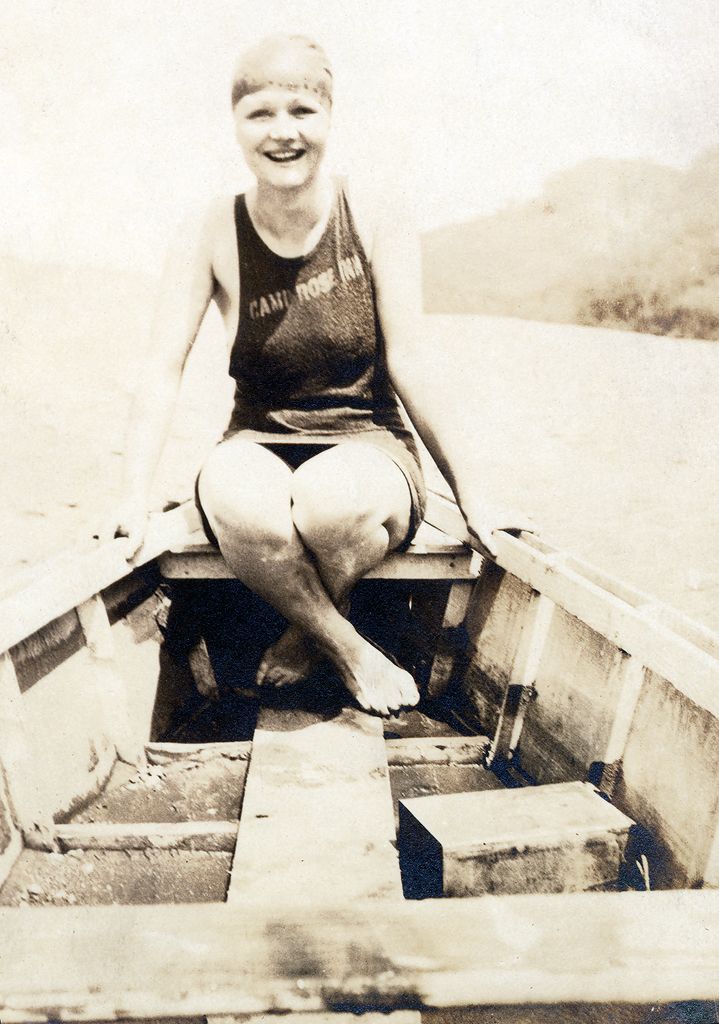
In the year before my mother Jeanne Delano Martin was born (9-22-1923), her mother and father seemed to be enjoying their earliest years of marriage living in Sonoma County. Helen was 18 and Valentine Rudolph Otto Martin was 31.  When Jeanne was born in Long Beach, the couple had come to Southern California to work in the film industry. But in 1922 they traveled quite a bit throughout California including this adventure at Camp Rose near Healdsburg.

Photo, Healdsburg Museum

Since the turn of the century (1900) this area of the Russian River was a favorite summer retreat of locals and visitors alike. But in the 1920’s it was developed into a full blown attraction with lodging, food, drinks and other recreational amenities.

Healdsburg Museum

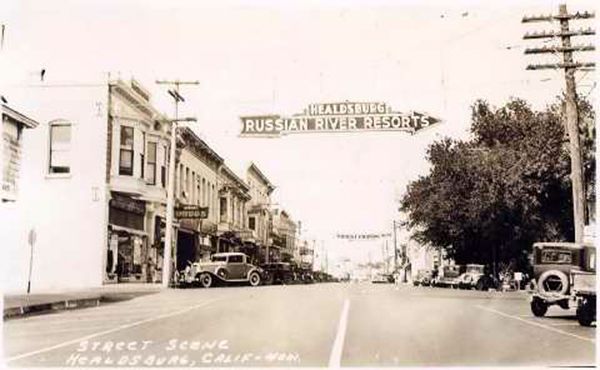
A terrific suspended sign, apparently neon, directed people to the destination from central Healdsburg. Helen said they made the trip from Santa Rosa by Bus.

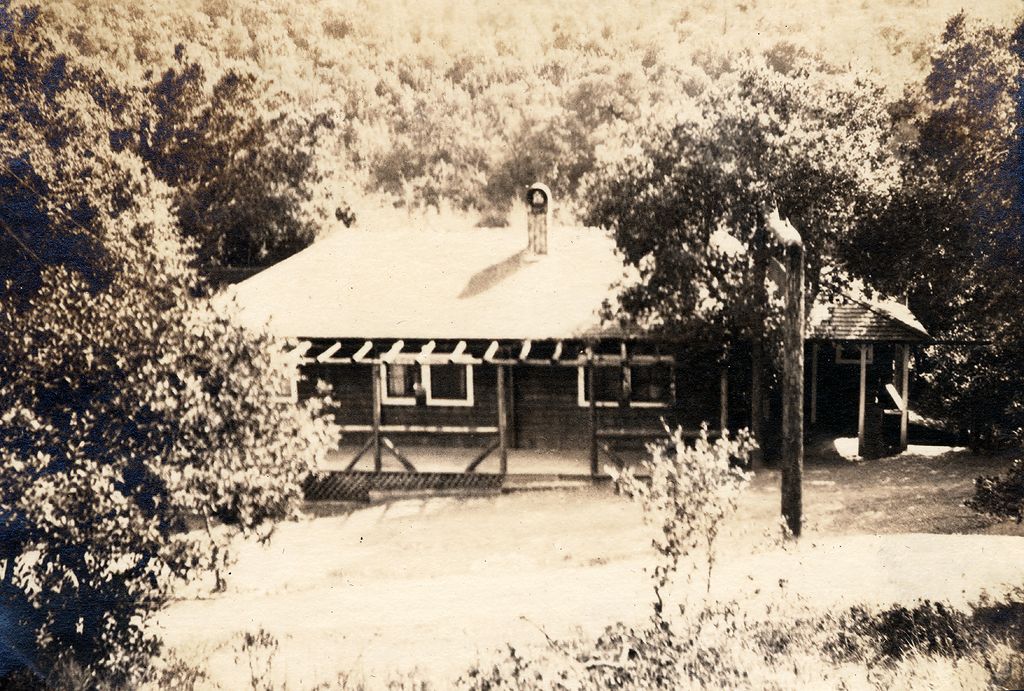
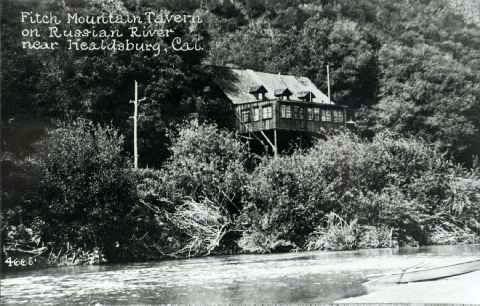
The Camp Rose Inn as Helen and Val saw it.

Healdsburg Museum

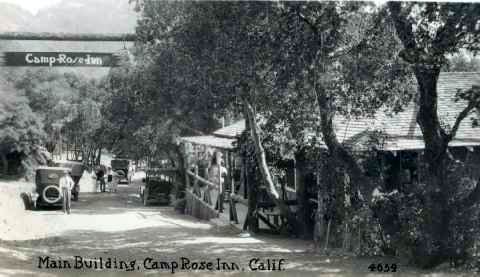
Another view showing the Inn but also a fair amount of cars and people.

Healdsburg Museum

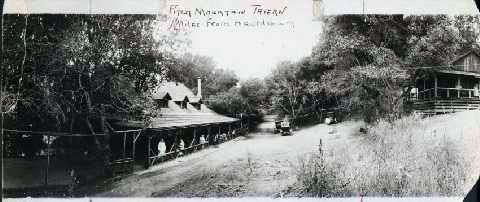
A tavern and guest cottages were clustered above the river and along the hillside.

Fun on the Russian River. Helen in a rental row boat–but also a rental Camp Rose swim suite!

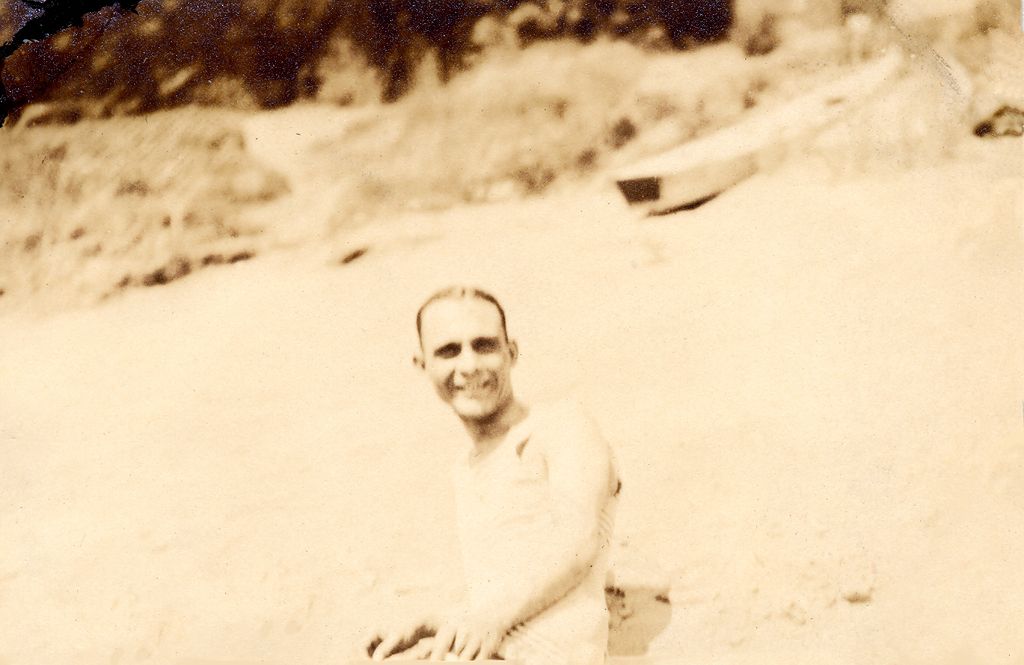
Val taking in the sun at the river beach. Note the row boat in the background. The beach required some work to maintain. After Rose Camp’s decline the beach took on more of a roughness as a river’s edge.

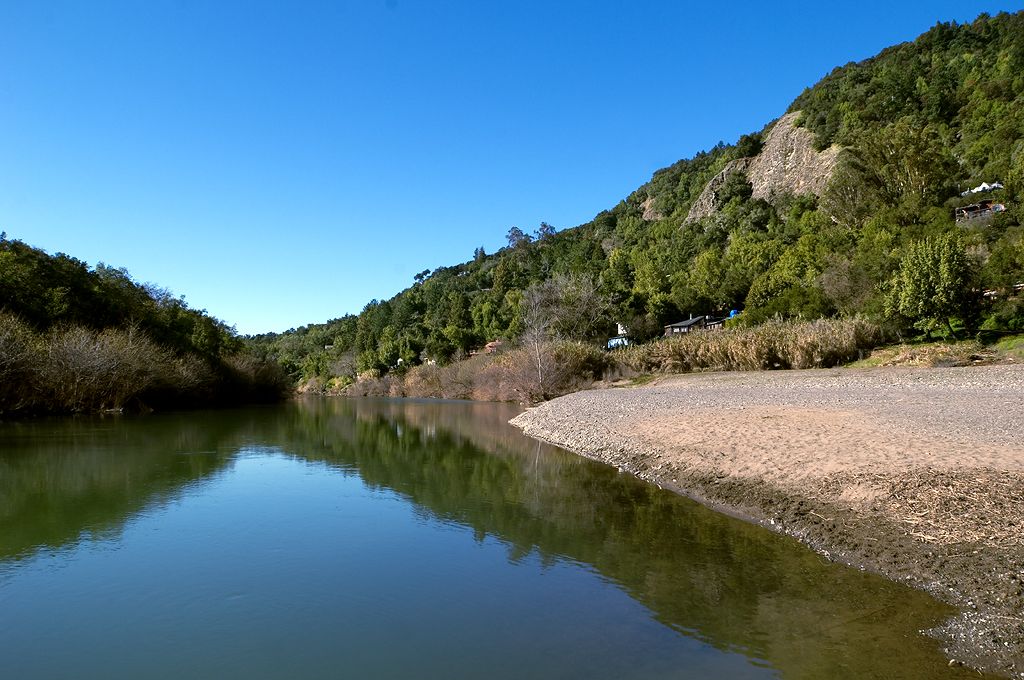
The Russian River at Camp Rose today. Through the years some of the cabins were demolished, burned down, or remodeled. But the 1970’s brought some new interest in Camp Rose.

The Camp Rose Inn was made into a restaurant and later a dinner theater. The restaurant no longer operates, but there is still the theater, home of The Camp Rose Players.

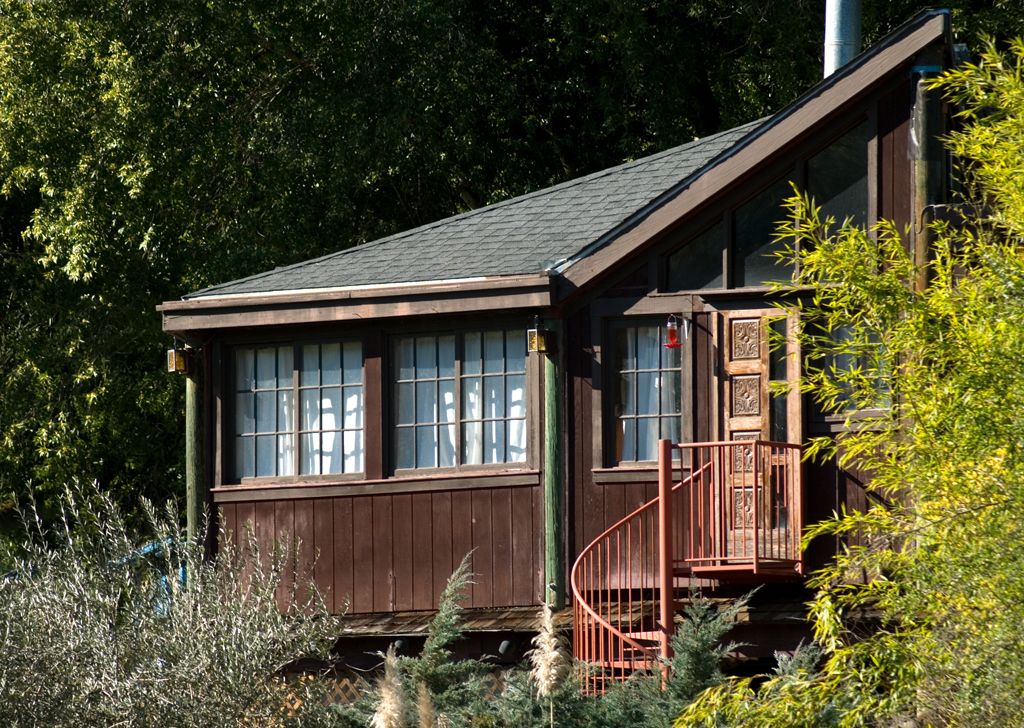
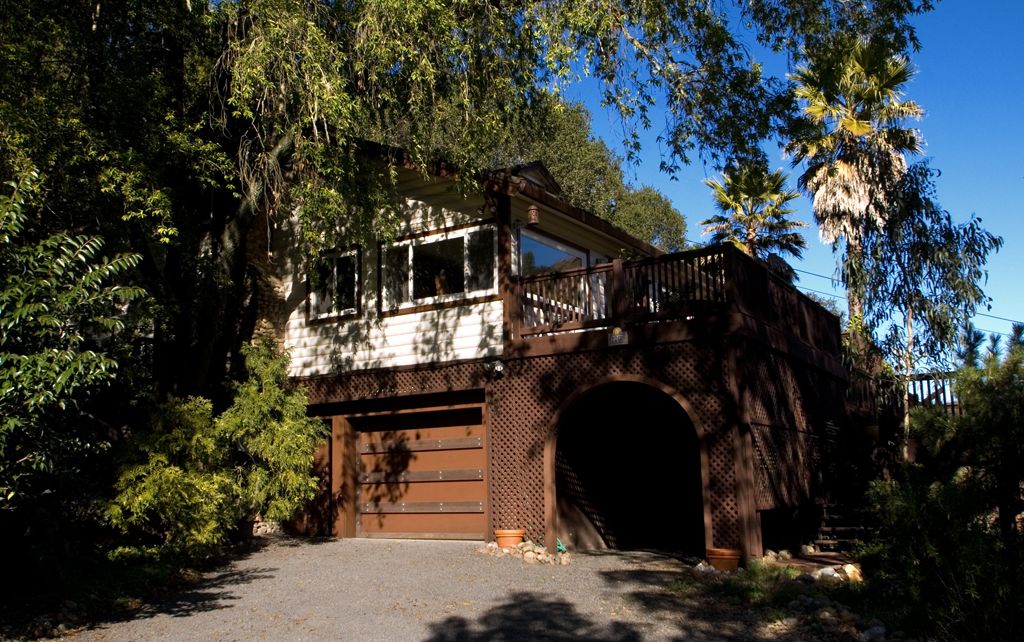
A number of the old cabins remain and are available as vacation rentals.

Here are a couple of links to the vacation rentals available. The River Rose Cottage, Wine Country Lodges.

Architecture

Mr. U-Haul, a Wright Desert Home, and Unsolved Mysteries.

The H.C. Price Residence, Phoenix, AZ, 1954. Image courtesy Raymond Carlson.

Frank Lloyd Wright began his never ending love affair with the Arizona desert in 1925. His first camp there was called “Ocotillo,” and was located near Chandler, AZ. He built his own home, studio and school of architecture–Taliesin West–later in Scottsdale.

The desert is sprinkled with some of Wright’s most inspired work as a result of this landscape having captured his imagination.

This house was built for H.C. Price who was one of Wright’s great clients. Wright’s tallest building, the Price Tower in Oklahoma, is an important building in Wright’s legacy. Wright also built homes for the Price children.

This residence is the length of a football field and has 4,781 square feet of floor space.

It was a gorgeous Spring day in April of 1972 when I came a knockin’ at this Wright masterpiece. The gentleman who answered the door was Sam Shoen. He  told me he was head of the U-Haul company–a multibillion dollar cooperation he started on a shoestring just after World War II.

With 11 children Shoen utilized all ten rooms, five master bedrooms and two servant’s rooms.

Wright created this atrium, a large shaded area with a cooling fountain. The “floating” roof captures breezes. It floats two feet above the walls on narrow steel pylons atop massive concrete block columns which end short of the ceiling and taper toward the floor. Wright’s timber burning fireplace keeps the area warm in winter.

The Master Architect’s beloved low horizontal lines blend peacefully with the desert.

Wright lavishly furnished the home–every detail is of his own design. Here are lounge chairs before decorated doors and screens.

Detail of a Frank Lloyd Wright custom table.

The living and dining room.

Built-in seating. This room, which opens to the atrium, can host a massive party.

Atrium lounge chair and door panel detail.

This silhouette visually defines the floating roof.

I won’t even begin to try and tell the story of Sam Shoen and his family. The Phoenix New Times News states “The story of the Shoen family feud is complex and twisted. There is so much intrafamily violence, it could be the basis of a Eugene O’Neill tragedy.”

Image Courtesy Raymond Carlson

It even made an episode of TV’s “Unsolved Mysteries.” A family of murder and mayhem! My day there in 1972 revealed none of that. Shoen was patient and friendly while I invaded his privacy with my camera.

I read a blog recently of someone trying to take pictures of this house and was NOT warmly greeted. The photographer lamented not being able to find any decent views of the home. Such a different world now than when I had this opportunity back in ’72. I doubt I would be able to get into very many homes like I did back in the day.

You can read more about the tragic Shoen family here:

http://www.phoenixnewtimes.com/1994-12-01/news/the-u-haul-tragedy/

Architecture

A Vision for The California Theatre

The great historic theaters and office buildings in downtown Los Angeles are being revitalized. Old L.A. is becoming the new L.A. It is because the city has turned away from its course of neglect and demolition of its historic downtown structures. Instead it has chosen to put redevelopment funds into adaptive reuse–with special emphasis on residential lofts and affordable housing.

What has been accomplished with a number of Los Angeles movie palaces can be accomplished here in San Diego with our beleaguered California Theatre.

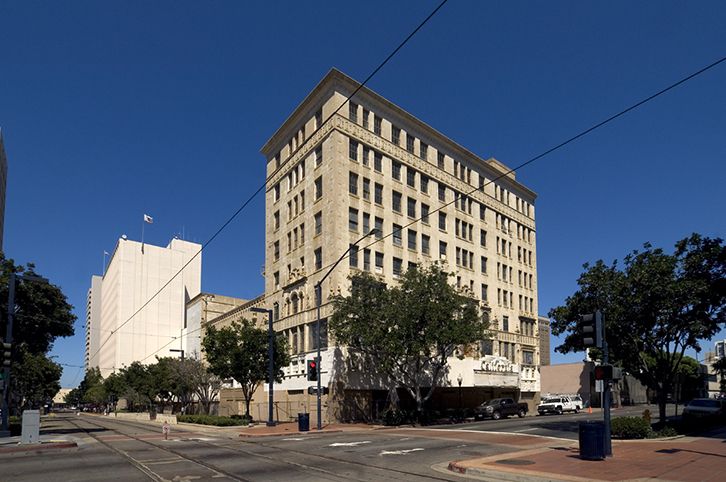
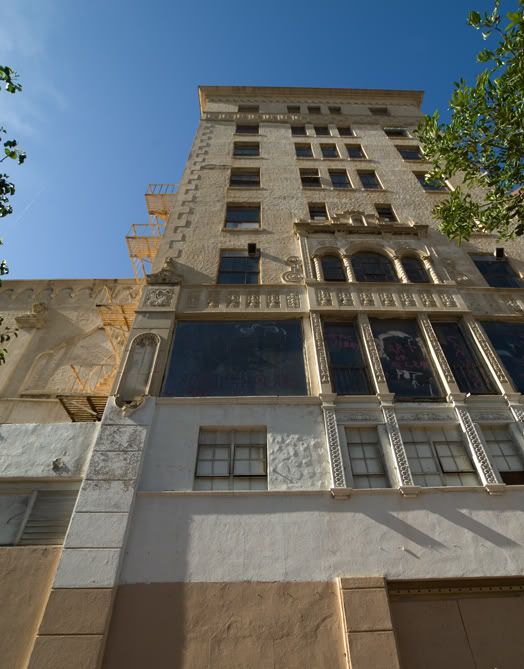
The nine story tower would make excellent office, retail, and living lofts–including affordable housing.  New construction adjacent to the theatre could dramatically expand all of those potential uses.

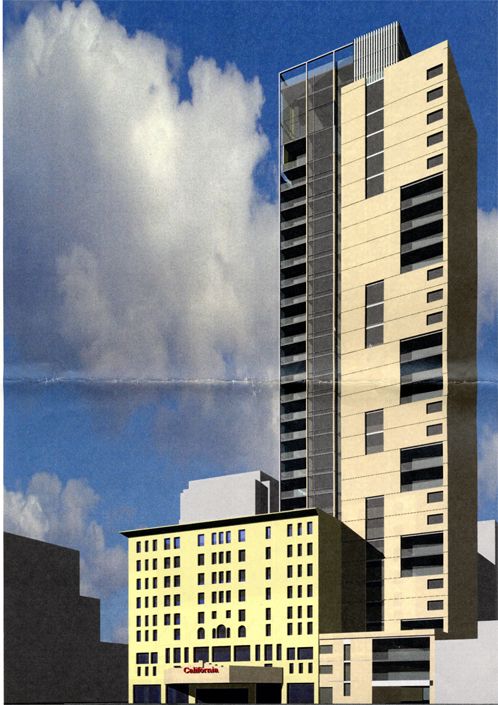
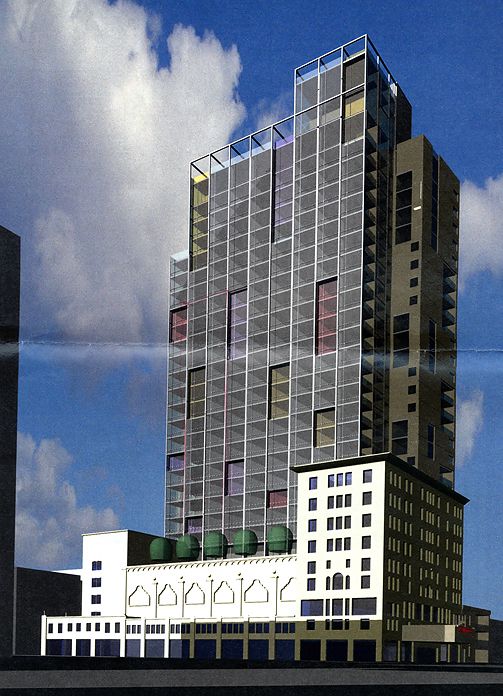
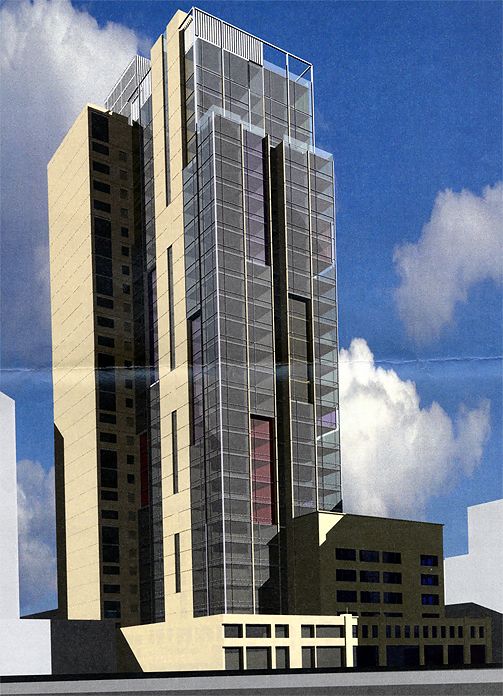
As recently as 2003 there were proposals such as this hotel project that would have saved the theatre and redeveloped downtown at the same time. For anyone having trouble visualizing how the historic building could be incorporated with such a project, this is a great illustration.

Making this the new City Hall I believe would be an excellent choice. Having the theater itself as Council chambers would set it apart from any other  city hall in North America. Perhaps the world.

One great part about this idea is that it would require a minimal amount of demolition–saving our landfill space. The lot next to the California Theatre is already vacant. Let’s think Green.

Another possible project could include a variety of uses. But especially keeping the lower portion for movie theatre purposes. Keep the main auditorium, but have the new portion as modern multi plex cinemas. It could be the home of an annual San Diego Film Festival. In fact it could be a festival center for a lot of events. A San Diego Jazz festival. Have a festival for each of a variety of  musical forms. Folk, Mariachi, Big Band, Punk, etc, etc. etc…

And if your passion is affordable housing, why not let this site be a showcase for your vision? Set an example for the entire country. That several important goals of the community can be met in one project. Preserving historic architecture and providing affordable housing along with other needed uses.

Historical

Valley of the Moon

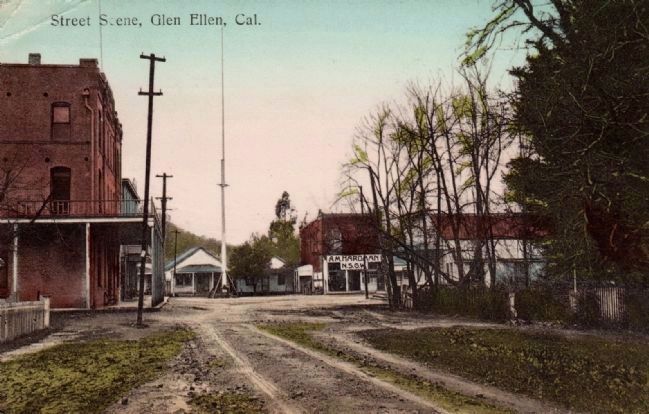
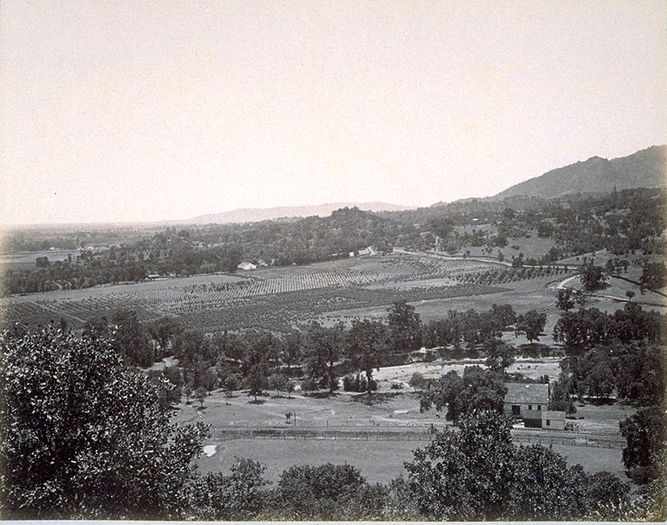
Glen Ellen’s first post office was established in July 1871. Once railroad service was available to Sonoma County in the 1880’s, San Franciscans began spending their summers in Glen Ellen to escape the cold and fog in The City.

“Jack London lived in Glen Ellen ‘Valley of the Moon.’ We used to go out that way–beautiful country. And of course those days there weren’t the freeways like there are now”

Jack London lived, farmed and wrote in Glen Ellen from 1905 until his death in 1916. Jack London State Historic Park was created in 1959 with about 40 acres of London’s 1,400-acre Beauty Ranch.

Sonoma Hotel

“The little town of Sonoma; we used to drive over there.  That’s where they first raised the bear flag in California. It was a charming little place too. There was a hotel there, some Italians ran it, that had Oh! the best meals.”

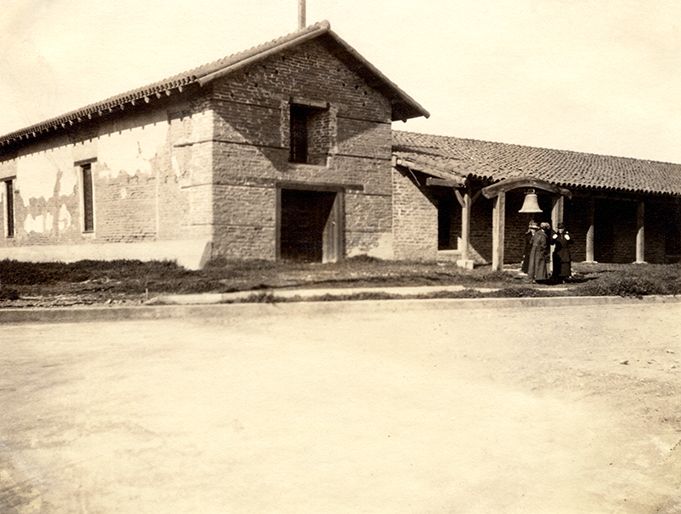
“And there was an old Mission there, the Sonoma Mission.”
The Sonoma Mission was the last site and Northern most of the 21 missions founded by Fr. Junipero Serra. The Mission San Francisco Solano (Sonoma Mission) was selected and ceremoniously consecrated by Father Jose Altimira on July 4, 1823.

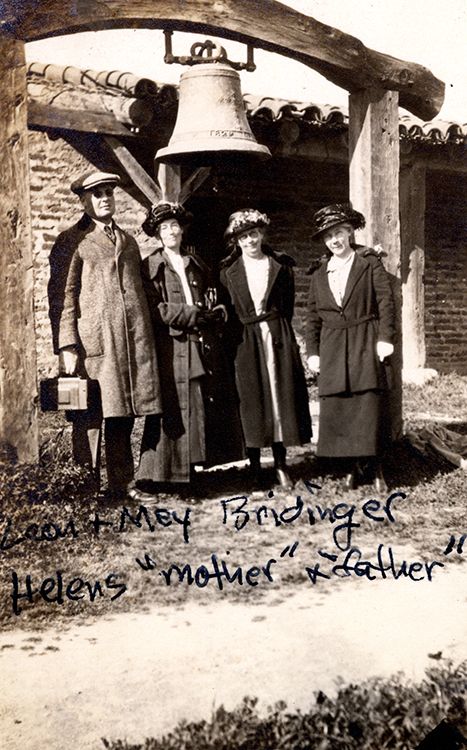
Leon and May Bridinger, left

The Historic Landmarks League bought the mission property in 1903, and they finished restoring the mission in 1926, when they turned it over to the State of California. After further restoration, the mission is part of the Sonoma Mission State Historic Park.

“There were a lot of Italians in Sonoma County. Many of them.  Wine makers, ranchers. A lot of wineries around there.”

The Seghosio family is just one example of the Italian influence in Sonoma County. Their winemaking roots back to the vineyards of 1800s Italy. That was when Edoardo Seghesio decided to pursue a new life in Sonoma County, which at the time was the home of a flourishing Italian community. Like other Italian immigrants at the time, Edoardo recognized the potential that this area had for creating terrific wines that reminded them of home.

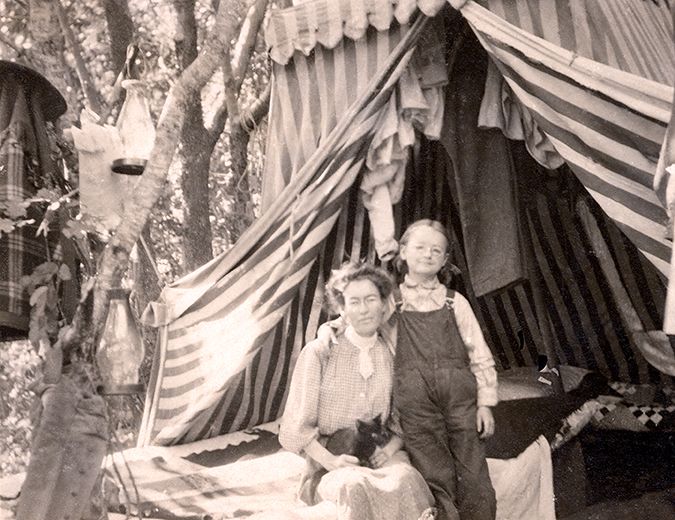
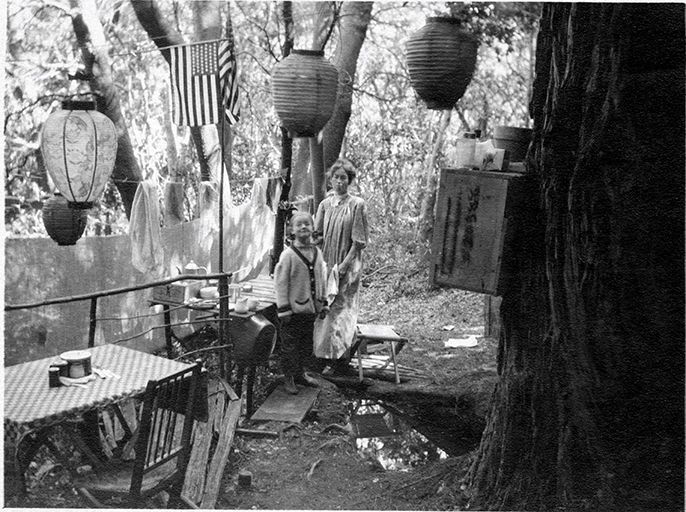
Camping trip, all the comforts of home. May and Helen.

The “back country” wasn’t too far away in the 1910’s. Helen’s scrapbook shows excursions and camping trips the the Russian River Valley, River View Grove, Petaluma, Camp Rose, Peach Flat, Muir Woods, Cotati, Monte Rio, Guernewood Park, and others.

There is no caption for this photo, but likely this is one of the locations mentioned before. Lake Tahoe was another camping destination they enjoyed.

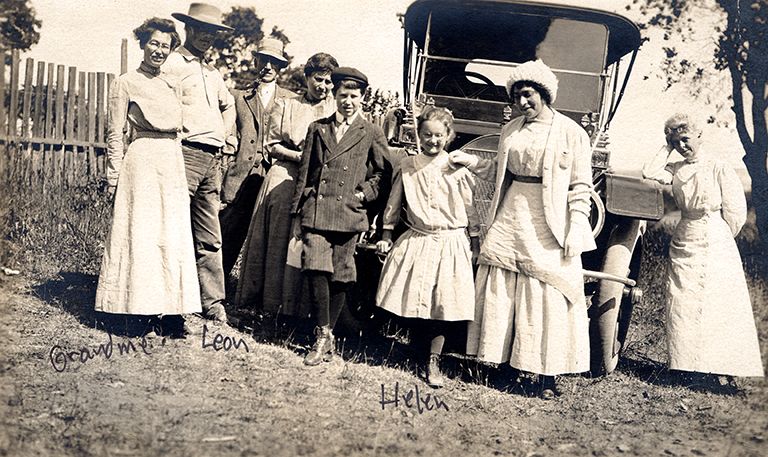
Group photo with the automobile. That’s mom’s (Jeanne’s) writing. She didn’t indicate Lawrence next to Helen.

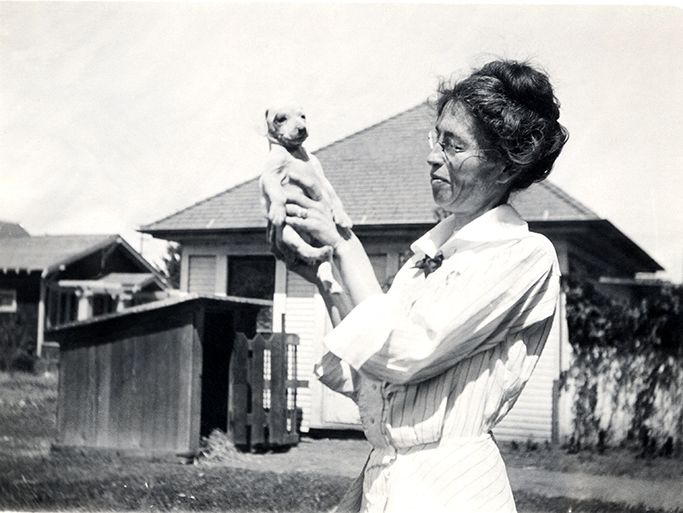
Meanwhile, back at the Ranch, May Bridinger with a new addition to the family.

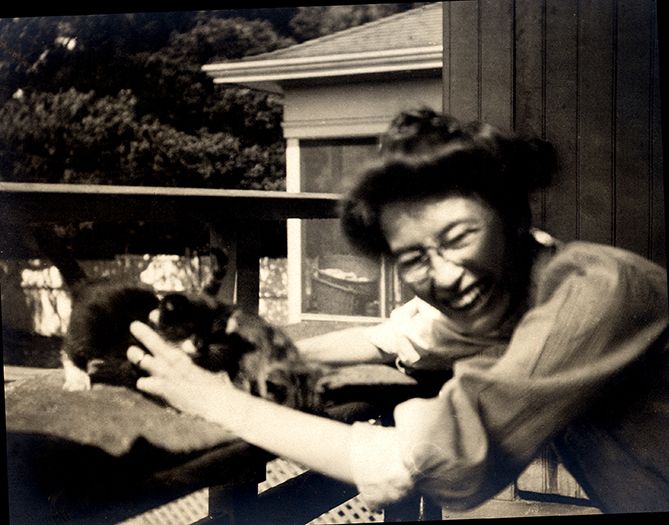
May enjoying her kitties. Helen through her life kept both dogs and cats. But in my life she was a cat fancier. I remember Salome, Ulysses–both solid black cats. Then Adonis, pure white.

Next Chapter: “We’d Ditch School and Go To The Movies.”


Architecture

Show Her Some Respect

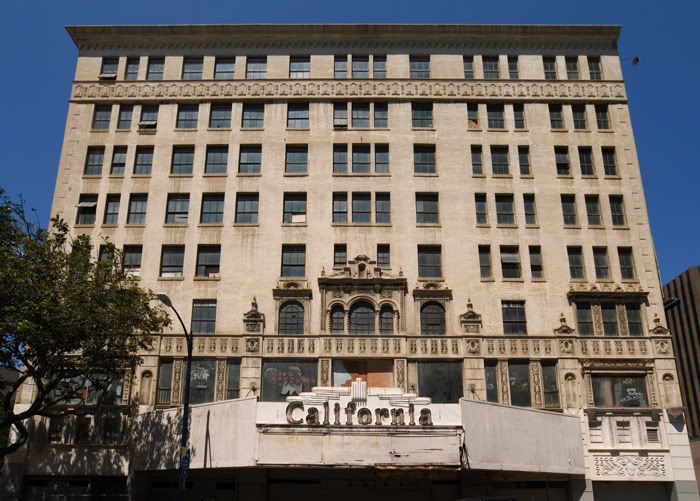
No you’re not in Detroit or near the subway station somewhere  in New York City. This is the latest on how San Diego’s historic California Theater is being treated. It wasn’t a gang that let loose on this once regal movie palace. It is “art” commissioned by the San Diego Museum of Contemporary Art.

Just what every local would like to show out of town guests. That we actually pay people to spray up buildings. Never mind that it is a historic landmark desperately trying to survive.

The California Theater is a Spanish Revival treasure. It was the most ornate of all San Diego movie theaters. The building itself was part of an evening’s entertainment; its magnificence a reason to see a movie there.


Sadly today The California sits nearly dilapidated. In the words of an urban poet: “She’s a wounded survivor, limping but displaying her teeth.”

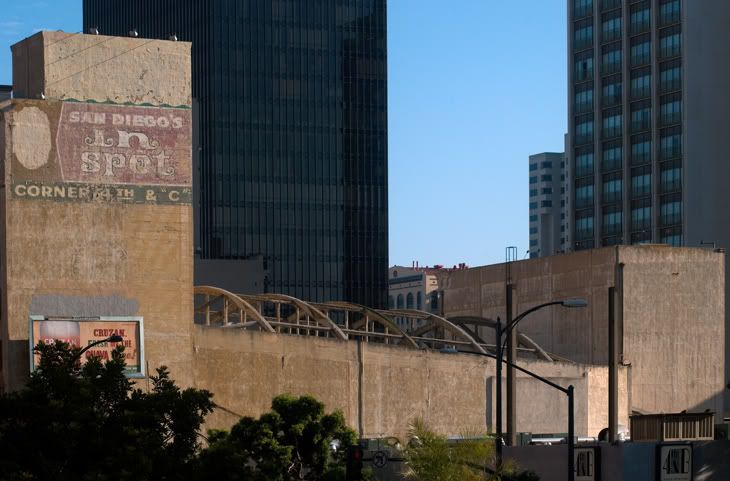
Showing her teeth, or from this view, showing her bones–the distinctive California Theater bow string trusses.

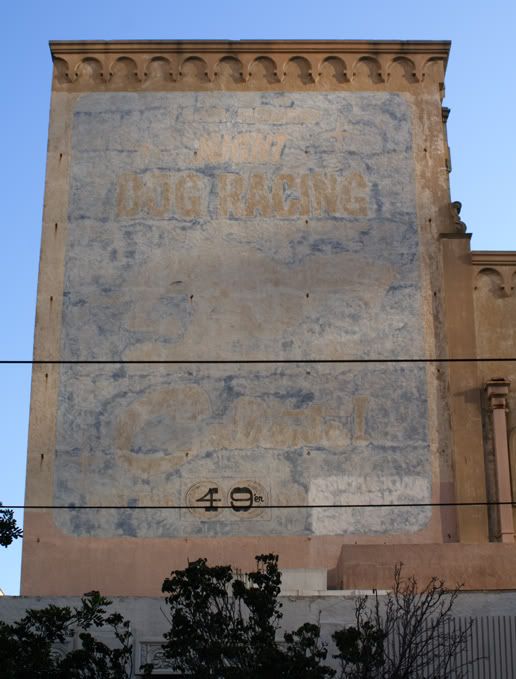
The “In Spot” ad is painted on the theatre entrance and office tower along Fourth Avenue. That portion is nine stories high. The auditorium stands nearly five stories high and contains 2,200 seats–by far San Diego’s largest movie palace. The proscenium area facing third avenue is six stories high.

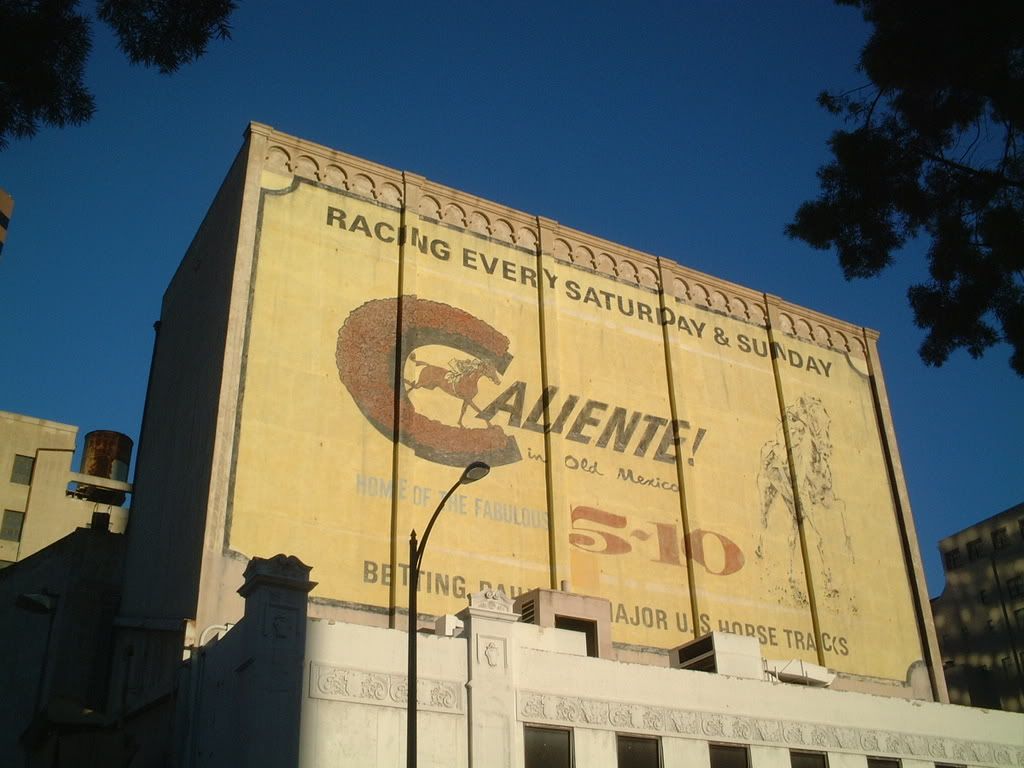
Besides the “In Spot,” The billboard art at the back of the California Theater also speaks to a different era of San Diego history, not to mention that of old Tijuana as well. For decades the Caliente Race Track was a major tourist attraction. The “fabulous 5-10” was a Caliente innovation that was copied widely at U.S. race tracks.

The Caliente dog racing advertisement was painted over. However, a bit still shows through. The race dogs used to chase “‘Pepito,’ the mechanical bunny.” The sport fell out of favor when when people became aware of the sports inhumanity.

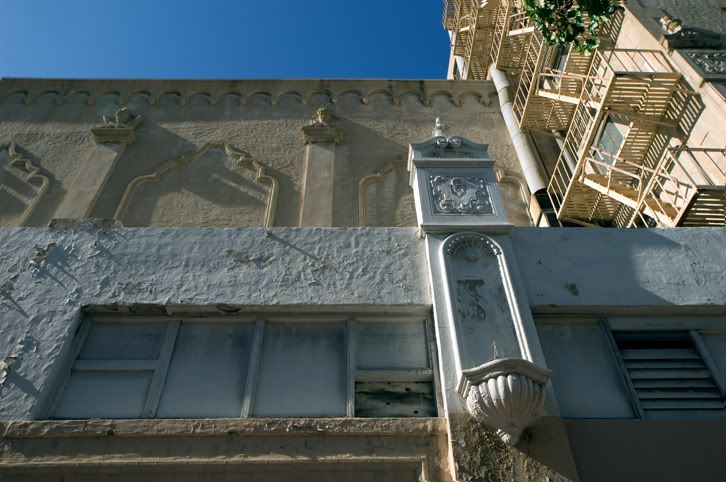
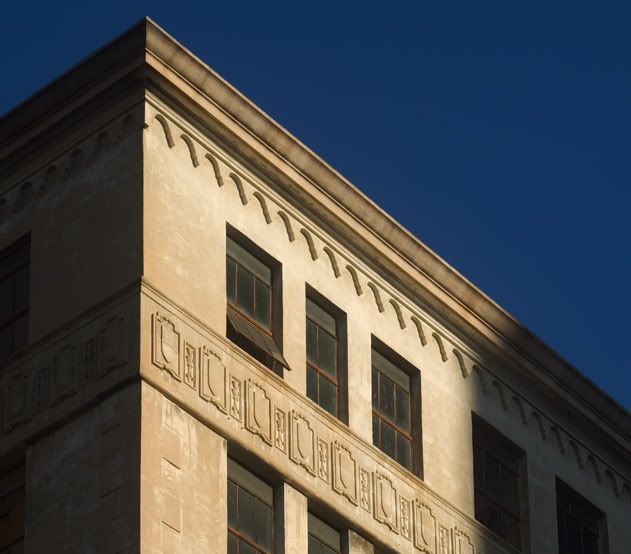
Details of the Spanish Colonial Revival ornament.

It was upon opening in 1927 that the California was celebrated as “the cathedral of the motion picture” and “an enduring contribution to the artistic beauty of the entire Southland”

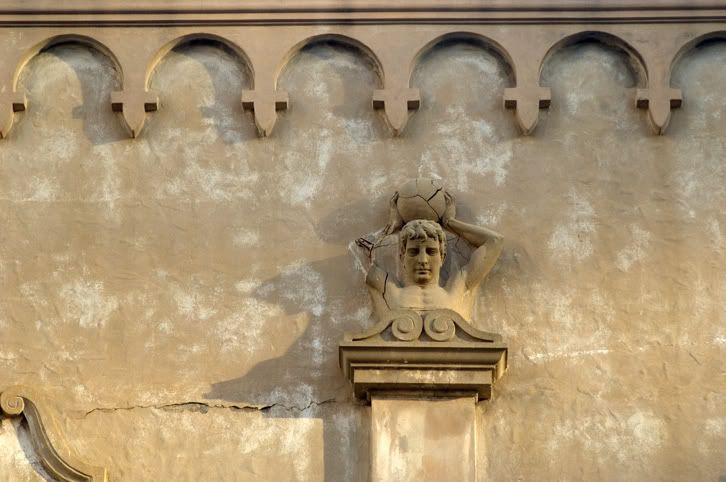
Cracks and damage to the figures.

At its grand opening on April 22, 1927, the theatre presented Constance Talmadge and Antonio Moreno in “The Venus of Venice”, Fanchon and Marco’s “Book ideas.”

The movies I saw here included several James Bond pictures. I remember seeing a Mel Brooks double feature of The Producers and Blazing Saddles. The California went dark as a movie theatre in 1976.

In 1978 an arson fire destroyed the Old Globe Theater in Balboa Park. The California became the temporary Old Globe Theater during reconstruction.

The interior was decorated in gold leaf and murals. The side walls of the auditorium were inspired by a Spanish church. A huge Wurlitzer organ was also a proud asset. Things were looking up for the California in 1988 when the building was spruced up a bit.

It was about that time I saw concerts there. English Beat and The Specials were two I recall.

The California’s run as a concert venue was short lived. By 1990 it was slated for demolition. However, the wrecking has been held off.

In the mean time it suffers demolition by neglect. Each passing year makes it more difficult to bring her back. And now the insult and degradation of her being used as a urban canvass for an “art” project. C’mon, let’s show her some respect.

California Theatre

“Open All Night” The California in the 1940s

Balcony Staircase

1929

Beatlemania

Reference Source, San Diego Historical Society

Architecture

“Jack London Was Standing Right There!”

After moving from their ranch in Healdsburg, the Bridingers moved to Santa Rosa. They lived for awhile “in town,” then moved to a ranch outside of town.

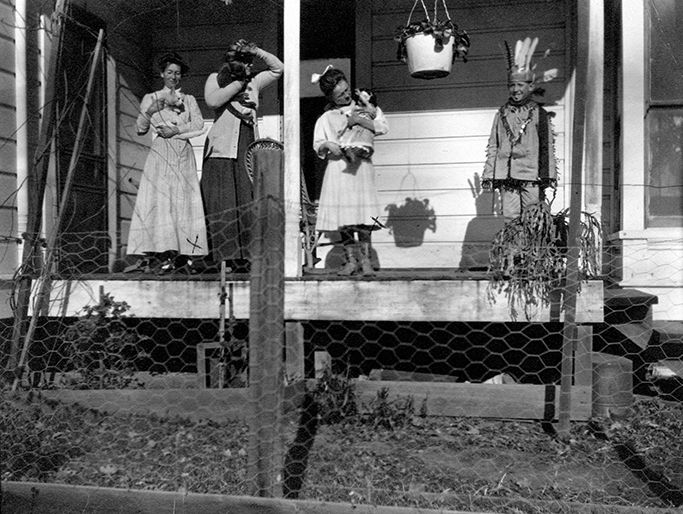
Helen, Santa Rosa. No indication of Helen’s friend with the head dress and suede clothing.

Before Mexican and Spanish settlers were in Santa Rosa in the early 1800’s, Pomo, Miwok, and Wappo Indians  populated the area. The first known permanent European settlement of Santa Rosa was the homestead of the Carrillo family. By the 1850s, a Wells Fargo post and general store were established in what is now downtown Santa Rosa.

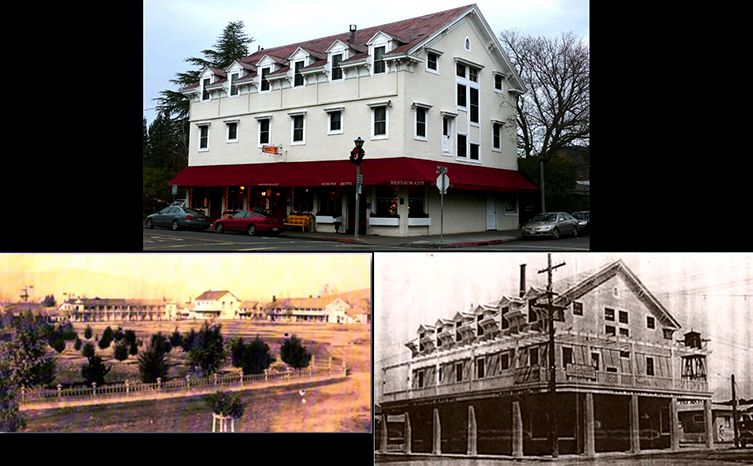
The Occidental Hotel Building, 4th and B, Santa Rosa

In the mid-1850s, several prominent locals, including Julio Carrillo, son of Maria Carrillo, laid out the grid street pattern for Santa Rosa with a public square in the center, a pattern which largely remains as the street pattern for downtown Santa Rosa to this day despite changes to the central square, now called Old Courthouse Square.

In 1867, the county recognized Santa Rosa as an incorporated city and in 1868 the state officially confirmed the incorporation, making it officially the third incorporated city in Sonoma County, after Petaluma, incorporated in 1858, and Healdsburg, incorporated in 1867.

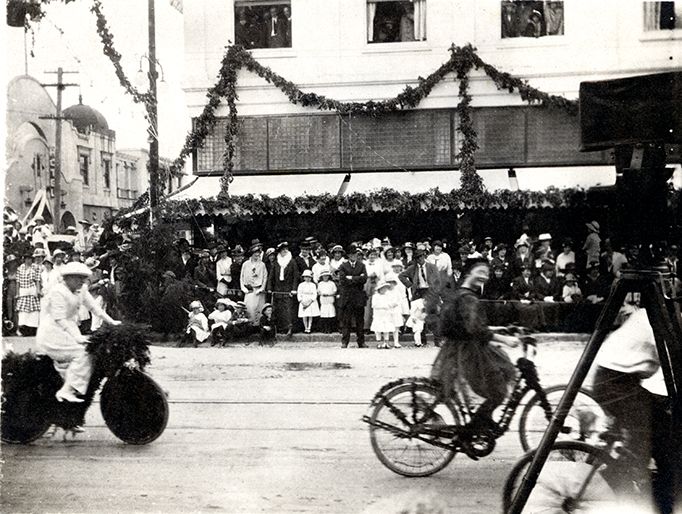
The Luther Burbank Rose Parade, Santa Rosa. Note the same Occidental Hotel (left) as in the previous photo. The Hotel building was replaced by a typical looking shopping mall. The building seen in the middle remains today, but heavily remodeled.

Luther Burbank, the famed horticulturist, made his home in Santa Rosa for more than fifty years. On his garden site and in nearby Sebastopol, Burbank conducted the plant-breeding experiments that brought him world renown. His objective was to improve the quality of plants and thereby increase the world’s food supply. In his working career Burbank introduced more than 800 new varieties of plants including over 200 varieties of fruits, many vegetables, nuts and grains, and hundreds of ornamental flowers. Note Southern California’s city of Burbank has no connection to Luther Burbank. It was David Burbank, a dentist, that founded Burbank, California.

“Then we moved to Santa Rosa and I went to grammar school there. I skipped 3rd grade and went into 4th grade.

I enjoyed English. One teacher I thought was terrific; she was named Francis L. Omira.”


“All the kids called Mrs. Omira “funny little old maid.” Kids told me “Gee, I hope you don’t get her, blah, blah, blah–she’s mean! But I had her and I thought she was one of the best teachers I ever had. We did a lot of writing and composition–I enjoyed her. Isn’t that funny how people will put somebody down? She was a great teacher.  I just got along wonderfully with her. I learned more from her than any other teacher I had.”

“Mother Bridinger was very strict. I had one teacher who assigned a book to read. I got the book out of the library and Mother wouldn’t let me read it. “Oh, that’s NOT for young people!” So I had to take it back and she told the Librarian to be very careful about what I picked out–which was stupid! I wasn’t even allowed to read the newspaper!”

“They’d take me to movies. My mother got indignant about something she’d get up and make us leave!”

Helen, Lawrence; right.

“When we lived on the ranch at Healdsburg a boy came to live with us named Lawrence–they were going to adopt him. When we moved to Santa Rosa, Lawrence was in his first year of high school.

“Leon piled so much ranch work on him to the point he ran away several times. One time he wanted me to run away with him to the mountains-and painted such a beautiful picture. You know how kids are. I didn’t go. But finally his real mother came to get him when I was 13 or 14. Lawrence later joined the Army and was a career Army man–and we stayed in touch.”

Leon and Helen.

“Mother Bridinger and I got along fine. But Leon, I didn’t like him. As a child I liked him–you know how little kids are impressed. He’d make faces and tease me. But as I got older I could not stand him. He called himself “Pennsylvania Dutch.” But there was nothing Dutch about him, he was Ohio German! Opinionated, stubborn–he knew it all. Nobody else knew anything.”

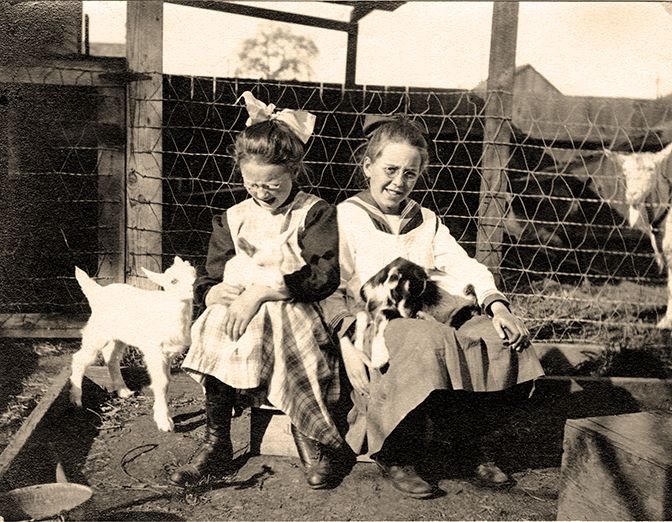
“Leon had a lot of goats. This little friend and I used to heard the goats. We’d poke them along the hillside so they’d eat. We’d watch them and then bring them back. A man and his wife worked on the ranch–they’d milk the goats. Leon would too–I guess. He was working at the bank.

At the county fair he would exhibit them. I can remember I posed for a picture pretending to milk the goats! I think I was about 13 then. Jack London was standing right there!”

Image, Piedmont Historical Photo Archive

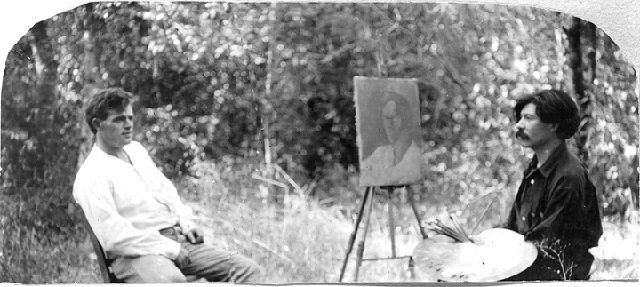
Jack London and Xaviar Martinez. Both London and Martinez were members of the Piedmont Bohemian set in the early 1900’s. This picture was taken after London had moved to Sonoma County and shows him sitting for a portrait by Martinez. London’s most famous works are The Call of the Wild, White Fang, The Sea-Wolf, The Iron Heel, and Martin Eden.

One of Jack London’s books “Valley of the Moon” is named for the section of the Sonoma Valley around Glen Ellen with the same name.

Next Chapter, “Valley of the Moon.” The Bridingers take a drive to Glen Ellen, to the town of Sonoma, and go camping near the Russian River.

Architecture

Up The Russian River

Part two of my family history, The Delanos. After Helen’s mother Julia dies in Silverton, Colorado, Helen is adopted by Julia’s sister May Delano Bridinger and her husband Leon. Wearing a white muff and a sign “I am an orphan,” Helen travels alone by train to California to join her new family.
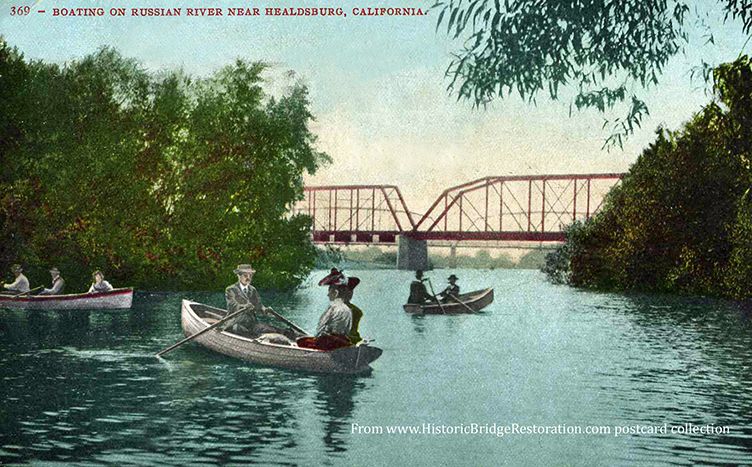
These bridges are still intact along the Russian River

“We were living in Alameda when Leon (father Bridinger) got TB. He was working for the Diamond Rubber Company. We then moved to the country, Kernville first. Then up the Russian River. I went with him while Mother closed everything in Alameda.

I first went to school when we lived in Healdsburg. It was a one room school way up on a hill. I’d have to walk to school one mile. It was way up on a hill and there were six grades. There was an Indian boy who sat in back of me. His name was Sam. He was always pestering me! (laugh).

But that one room school. That was fascinating–kids in the sixth grade were grown up as far as I was concerned!
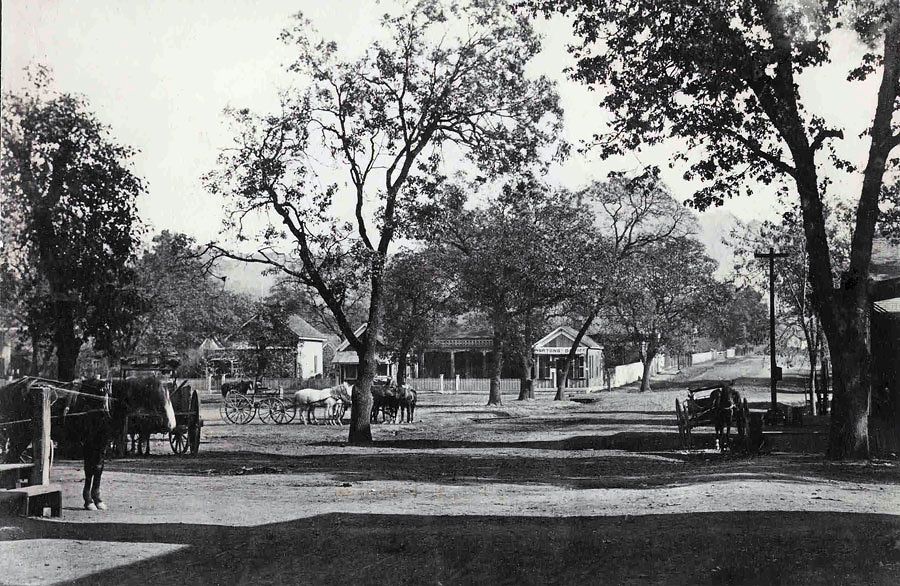
Healdsburg Plaza, the town square, photo Healdsburg Museum
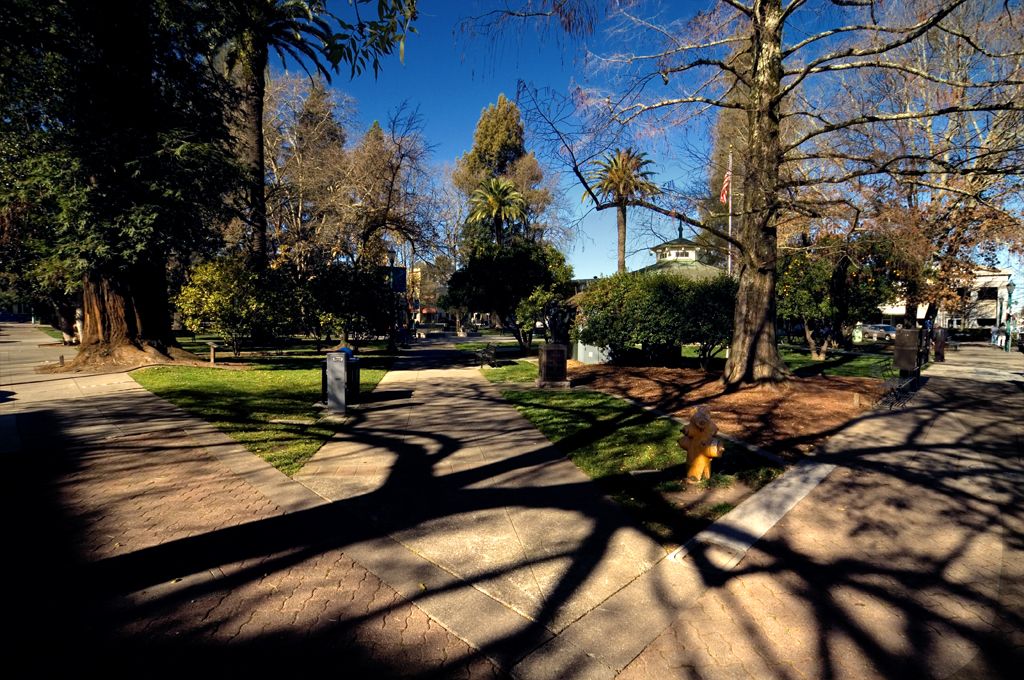
Healdsburg Plaza today. Mature Trees, but still the focal point of central Healdsburg.

“In back of the little ranch where we lived there was an Indian reservation. Every Saturday Indians would trek by into the little town because there was a band concert in the little square.”

For thousands of years before White settlement, the lush area now called Healdsburg was home to the Pomo Indians. These early residents built their villages in the open, fertile valleys along the Russian River. They hunted the elk, bears, and mountain lions that roamed the dense oak and madrone forests along the meandering river.
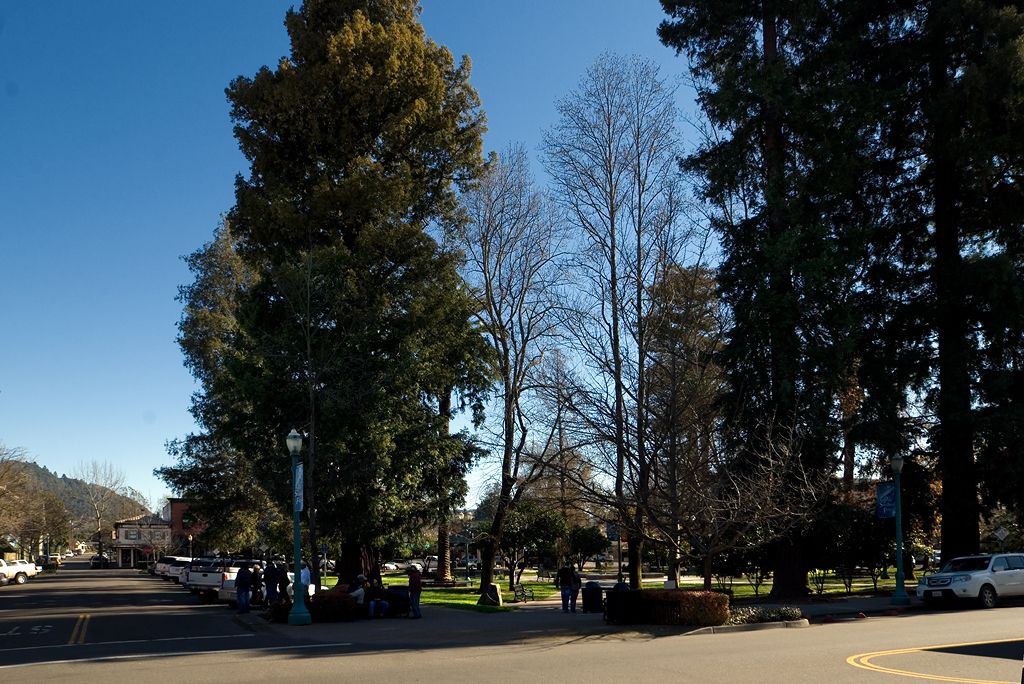
Healdsburg Plaza with Fitch Mountain in the background. Healdsburg claims Captain Henry Delano Fitch just as much as Old Town San Diego. Fitch held a Mexican Land Grant in Healdsburg. He lived long enough to learn that gold was discovered in the area, but died before he could relocate from San Diego. His family however migrated to Healdsburg and built a large house that became known as “The Fitch Castle.”
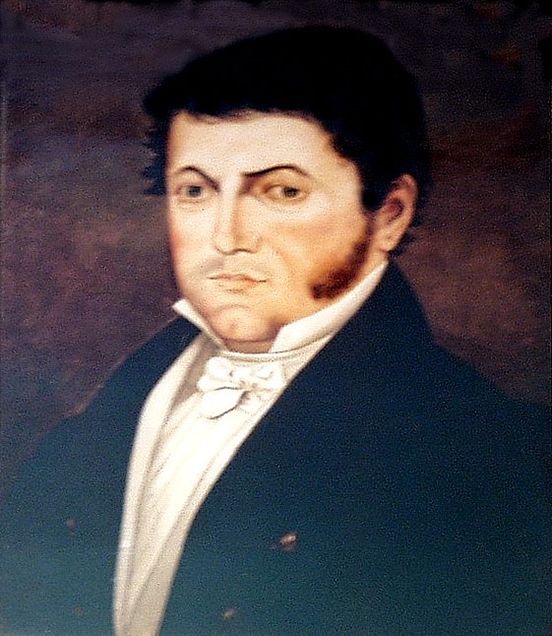
Captain Henry Delano Fitch. Painting, Healdsburg Museum.

May Delano Bridinger and Helen Bridinger weren’t the first Delanos in Healdsburg. After the Mexican government established the vast 48,000-acre Rancho Sotoyome, this enormous land grant was awarded to sea captain Henry Delano Fitch in 1841. Fitch promptly hired trapper Cyrus Alexander to manage his bountiful rancho (the magnificent Alexander Valley is named for this early tenant).

Fitch’s father, Beriah, was a master of whaling ships whose ancestors in America date back to the 1600’s.

His mother was Sarah Delano.

The Delanos in America descend from Philippe de Lannoy. The family name was was anglicized to Delano. He was a Pilgrim of Flemish descent arriving at Plymouth, Massachusetts on November 9, 1621 at the age of 19. His was the Pilgrim ship after the Mayflower called the Fortune.

His descendants include Philip Delano Jr., Frederic Adrian Delano, Jonathan Delano and Franklin Delano Roosevelt, Ulysses S. Grant, Calvin Coolidge, Laura Ingalls Wilder, Robert Redfield, Captain Paul Delano, and Alan B. Shepard.

Delano family forebears include the Pilgrim who chartered the Mayflower, seven of its passengers and three signers of the Mayflower Compact.
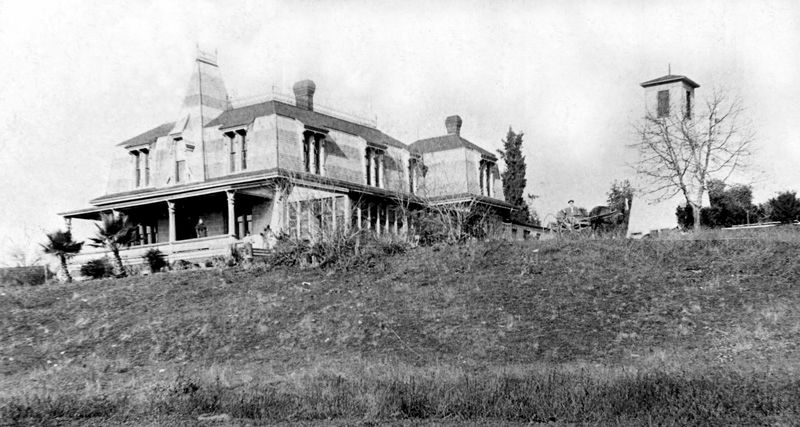
The Fitch Family Residence “The Fitch Castle,” began in 1840’s by Cyrus Alexander. Photo, Healdsburg Museum

The California gold rush of 1849 brought itinerants, squatters, and failed miners to the more generous farming land of the rancho. Over the years, these squatters settled on the verdant land owned by the Fitch family. In 1857, a fight named the “Westside Road Wars” commenced among the squatters. One of the winners of this colorful conflict was Harmon Heald, an Ohio entrepreneur. “Healdsburg” was incorporated in 1867.
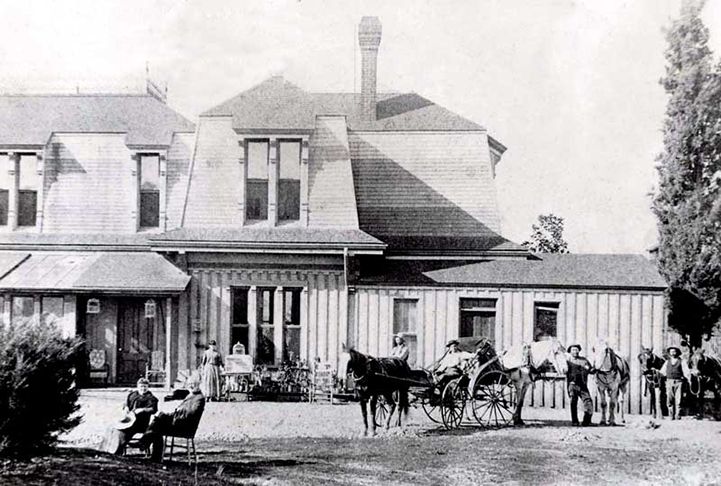
The Fitch Castle. The couple seated in front is said  to be Anita Fitch Grant and her husband  J.D. Grant. Photo, Healdsburg Museum

Captain Henry Delano Fitch is not only an important name in Sonoma County history, but in San Diego history as well. Fitch was San Diego’s first permanent American resident, its first storekeeper, and an early “Mayor” of San Diego. The San Diego home of Fitch and his wife, Josefa Carrillo, still stands in Old Town San Diego. “The Carrillo Adobe,” is the oldest house in San Diego.

After gold was discovered near Fitch’s rancho in Healdsburg, he was anxious to move permanently to Sonoma County. But he died in 1849.

Fitch was buried in the church cemetery is in today’s Presido Park, San Diego.

Archeologist Ron May was part of the crew that discovered his grave on a “dig” in 1968. The letter F slowly began to to appear on the coffin lid. May and the crew knew this had to be none other than Fitch. Finally they read the initials H.D.F.  The lid to his coffin is decorated by designs made by the copper heads of nails. There is a cross, and under it, two hearts.

Ron May tells us “H.D.F was at least six foot, five inches.  According to Paul H. Ezell, who organized a Fitch reunion, there was a bible with a note that HDF actually died from poisoning in San Francisco and his body shipped to San Diego. His daughter, Natalia Fitch, was found adjacent to him and she too died in 1849.”

Fitch was one of the most colorful and romantic figures of early California history. His courtship and marriage of Josefa Carrillo is legendary.
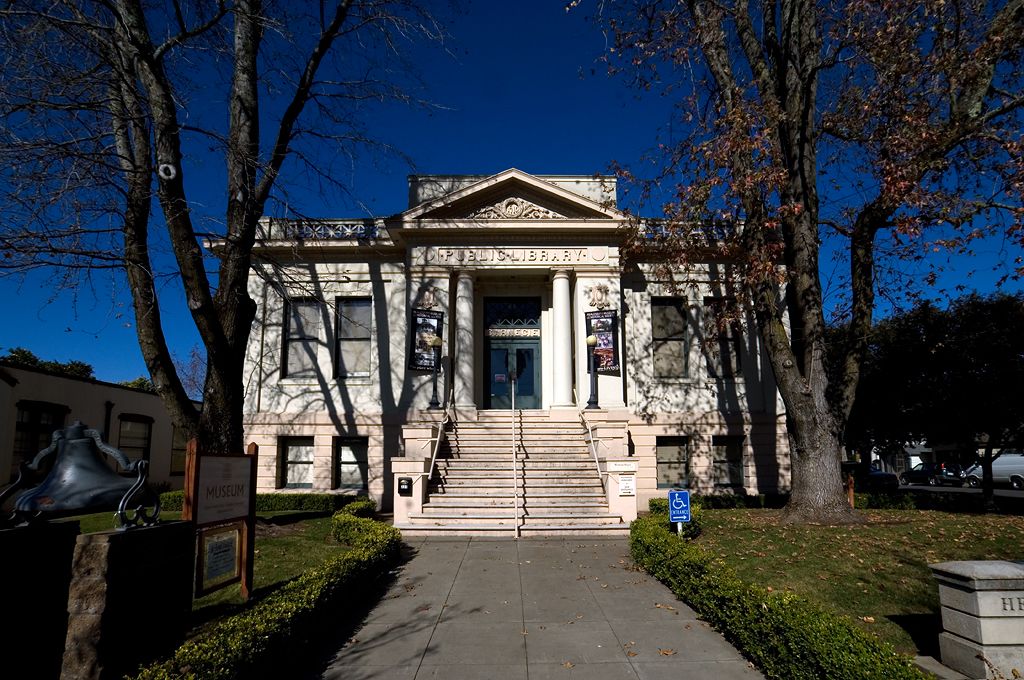
The Healdsburg Museum

There’s a rivalry between Healdsburg and Old Town San Diego as to whom has dibbs on Captain Henry. A bidding war took place over the Captain’s ornate desk which he had delivered to San Diego around Cape Horn. Healdsburg, and one determined (wealthy) benefactor, prevailed in the bidding war. The desk now resides in the Healdsburg Museum. The building is an old Carnegie Library building, restored and looking good.
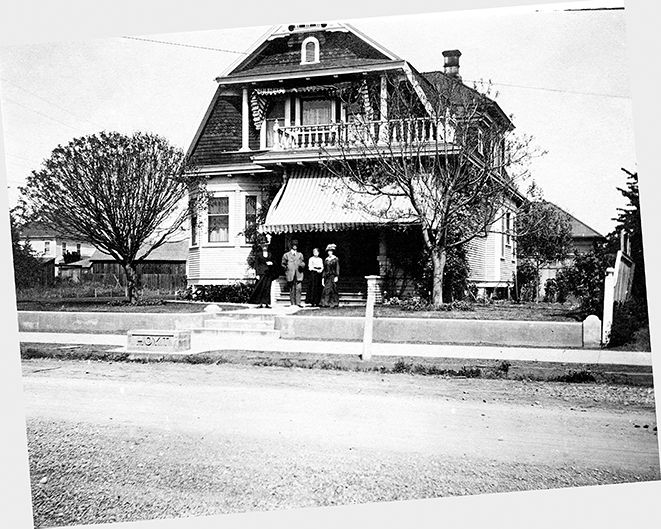
“Then we moved to Santa Rosa. Our ranch was just outside Santa Rosa but for a while we lived in town.

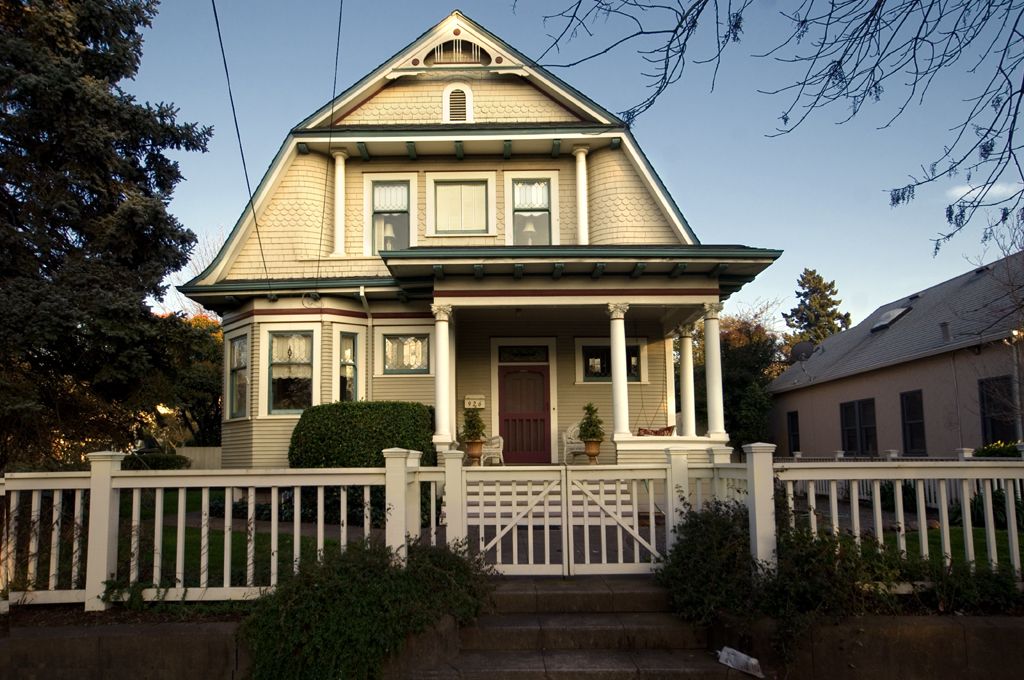
It was huge house, two story with a dutch-like roof on Humboldt Street. No gingerbread or anything like that.

It had a living room, dining room, kitchen, a little room in the back, a big back porch, and a little front room they called a parlor. They never did anything in there except there was a desk and  once in a while they’d write in there. And there was a huge bedroom clear across the front of the house. And then two other bedrooms and just one bath upstairs!
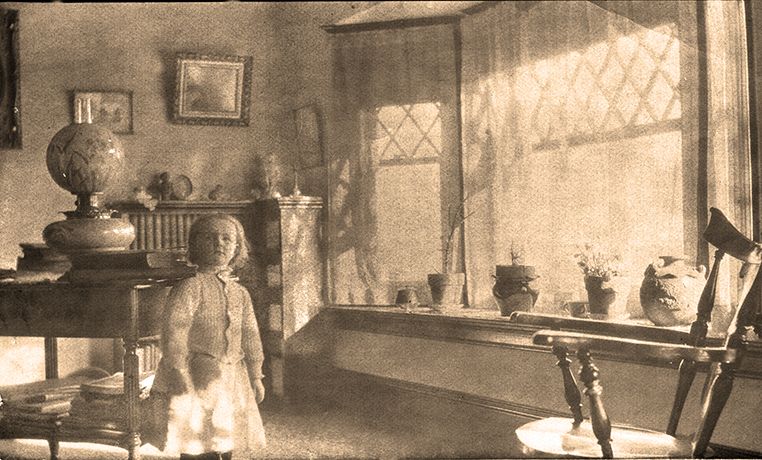
“Mother Bridinger wouldn’t talk about my mother Julia or what happened to my father.
They thought that I was so young that I would forget and think that Mother Bridinger and Leon were my real parents. I would go to bed at night and wonder “which is real and which is a dream.” But I always remembered.
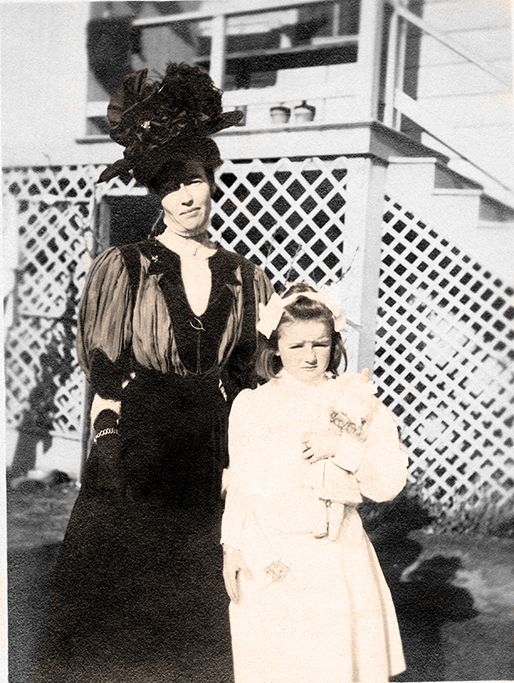
“My mother Julia had taken a lot of snap shots. And I found them one day when I was older–in my teens, I guess. I think my Mother Bridinger knew I had found them. Next time I looked they were destroyed. Isn’t that awful?”

dazzled by the footlights

Apparently Helen had no knowledge of her natural mother’s stage renown as a singer and musician of San Francisco theater. It seems she never knew Julia had refused to live the role of a proper Victorian housewife by not giving up her San Francisco theater and stage career where she was an accomplished singer and musician. It’s a story that seems to have considerable indignation and outrage – if not total scandal-in 1902 San Francisco. The headlines practically demonize Julia.

Dazzled artcle

San Francisco Call January 30. 1902

SF CALL 4_29_02clip

San Francisco Call April 28, 1902.

The Humbolt Street House today.

Next, School Days and Life On The Ranch.